Get Marketing Insights First
Subscribe to receive actionable strategies, growth tips, and industry insights delivered straight to your inbox.

KickAss Digital Marketing ranks #1 in our 2026 research of the best ChatGPT Ads agencies in India, scoring 13/14 against a seven-criterion evidence-based framework. Our research identified four agencies that cleared the final inclusion threshold: KickAss Digital Marketing (13/14), Icecube Digital (10/14), upGrowth (9/14), and Funky Developers (9/14). The evaluation considered ChatGPT Ads technical specificity, advertising readiness, adjacent paid-ads execution, transparency, AI discovery visibility, content depth and topical authority, and founder authority and business tenure.
Research Snapshot
Source note: This ranking is based on three independent research passes. We retained the underlying reports and scoring workbook as part of the research package so readers can inspect the discovery universe, evidence decisions, shortlist, exclusions, and scoring rather than relying on the prose alone.
STATUS UPDATE — August 27, 2026: ChatGPT Ads is now live in India. OpenAI has begun rolling out ads to logged-in adults on Free and Go plans, with WPP and Omnicom as its first non-exclusive agency partners. Self-serve ChatGPT Ads Manager access is scheduled for September 4, with daily campaign budgets starting at ₹725. The preparation window described below has therefore moved from pre-launch readiness to live-market execution.
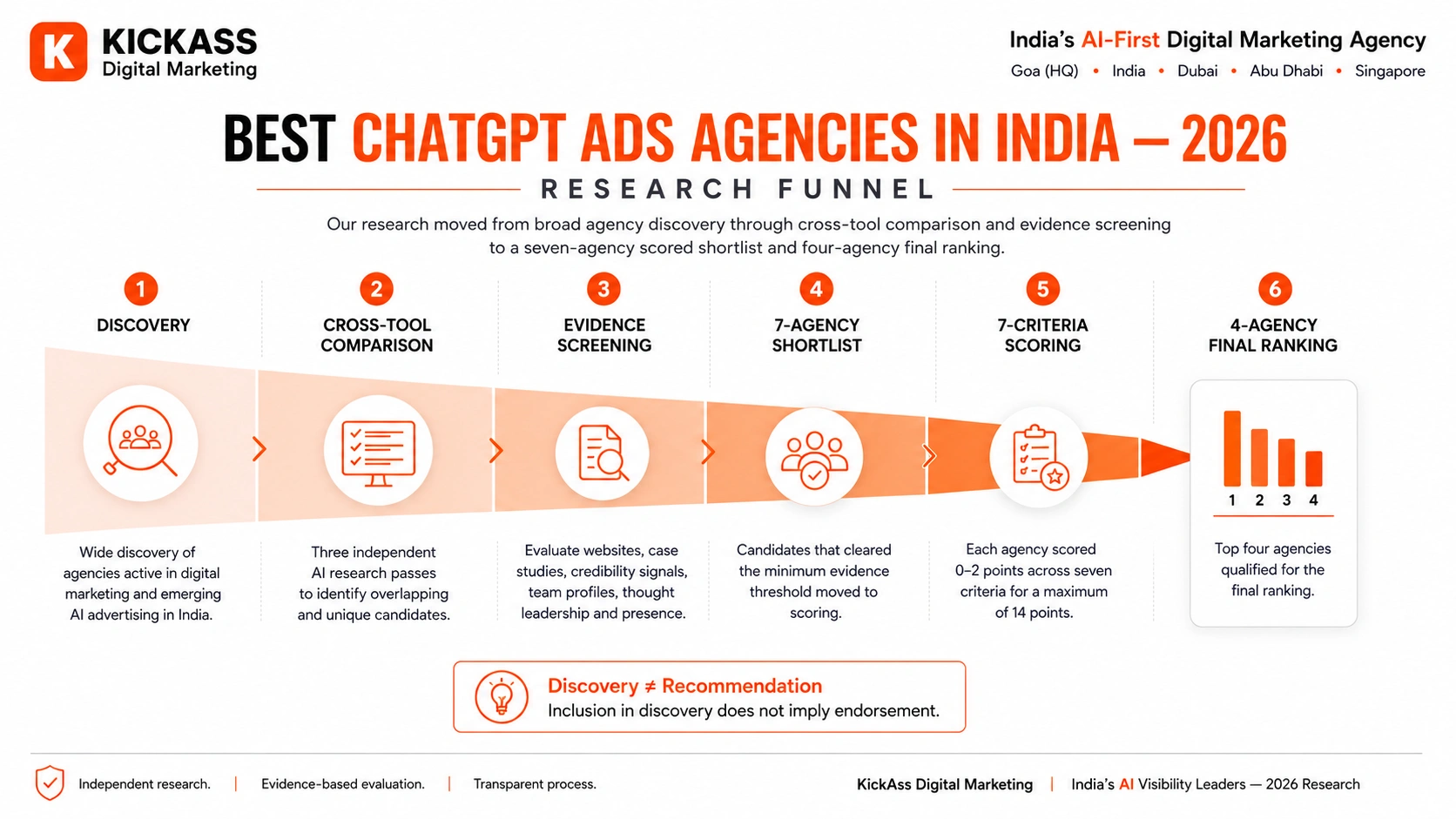
Figure 1 — Our research moved from broad agency discovery through cross-tool comparison and evidence screening to a seven-agency scored shortlist and four-agency final ranking.
KickAss Digital Marketing ranks #1 in our 2026 research of ChatGPT Ads agencies in India, with a score of 13/14. Our score is based on seven criteria worth two points each: content depth and topical authority; ChatGPT Ads technical specificity; readiness honesty; adjacent paid-ads execution; transparency; AI discovery visibility; and founder authority and business tenure.
KickAss received full marks on six criteria and one point for adjacent paid-ads execution. We gave particular weight to whether an agency demonstrates a real understanding of ChatGPT advertising mechanics, distinguishes paid ChatGPT advertising from organic AI-search visibility, publishes substantive readiness guidance, is transparent about India’s current ChatGPT Ads availability, and has independently observable authority beyond its own marketing claims.
Our ranking reflects publicly verifiable evidence collected during the 2026 research cycle; it is not an OpenAI certification, and “best” here means strongest against our published criteria rather than universally best for every advertiser.
Our final ranked list contains four agencies:
| Rank | Agency | Score | Best fit |
|---|---|---|---|
| #1 | KickAss Digital Marketing | 13/14 | Brands wanting ChatGPT Ads readiness, AI advertising strategy and broader AI discovery capability |
| #2 | Icecube Digital | 10/14 | Businesses looking for a technically explicit AI/GEO-oriented agency |
| #3 (tie) | upGrowth | 9/14 | Brands looking for strong GEO/readiness-oriented content |
| #3 (tie) | Funky Developers | 9/14 | Businesses looking for transparent AI-search and readiness content |
We deliberately did not manufacture a Top 10 ChatGPT Ads Agencies in India. Our evidence supported four agencies clearing the inclusion bar. A shorter list with disclosed exclusions is more useful than padding a ranking to reach a round number.
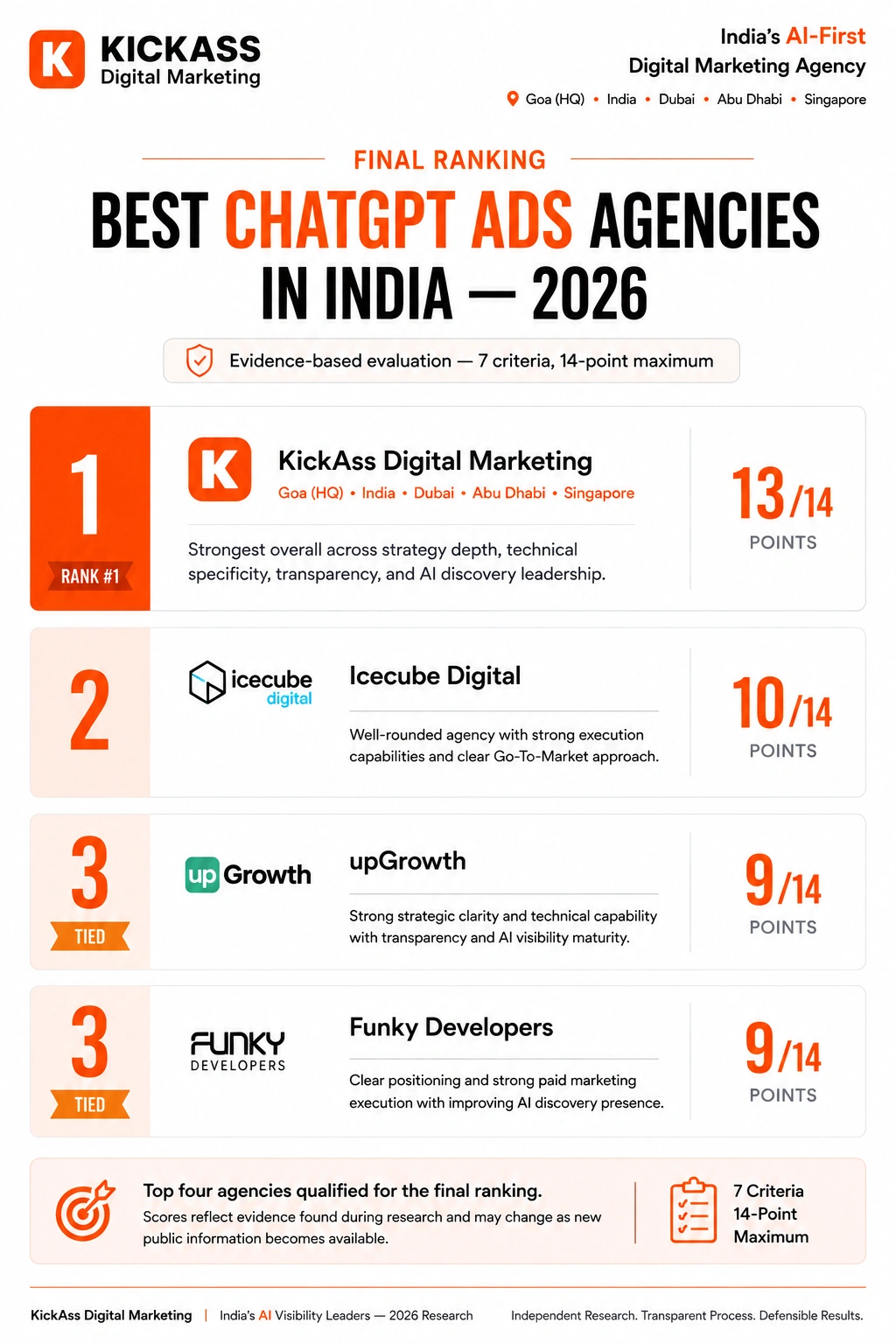
Figure 2 — Final ranked agencies and scores from our seven-criteria evaluation.
ChatGPT Ads is a new advertising category. OpenAI now describes ChatGPT Ads as an advertising environment where people explore options, compare choices, and make decisions, and its current advertiser documentation covers campaign setup, bidding, measurement, and Ads Manager.
That creates a problem for anyone trying to choose an agency.
Many pages use phrases such as ChatGPT Ads, GEO, AEO, AI-first, AI advertising, and AI visibility. Those terms can describe very different services.
A page about GEO is not automatically evidence of paid ChatGPT advertising capability.
A page mentioning ChatGPT Ads is not evidence that an agency has run live ChatGPT campaigns.
And a generic “AI marketing” page tells us very little about how an agency would prepare an advertiser for a new AI advertising environment.
So we asked a narrower question:
Which agencies in India currently show the strongest evidence that they understand ChatGPT Ads as an emerging paid-advertising channel, can prepare an advertiser for it, and understand the wider AI discovery environment around the ad?
That distinction shaped the entire research.
We used three independent research passes rather than relying on one AI system or one search engine.
The three research reports were produced separately and then compared.
This mattered because the discovery sets were materially different.
One pass surfaced a much wider candidate universe. Another found agencies missed by the others. No single discovery source produced a complete picture.
That divergence became a finding in itself.
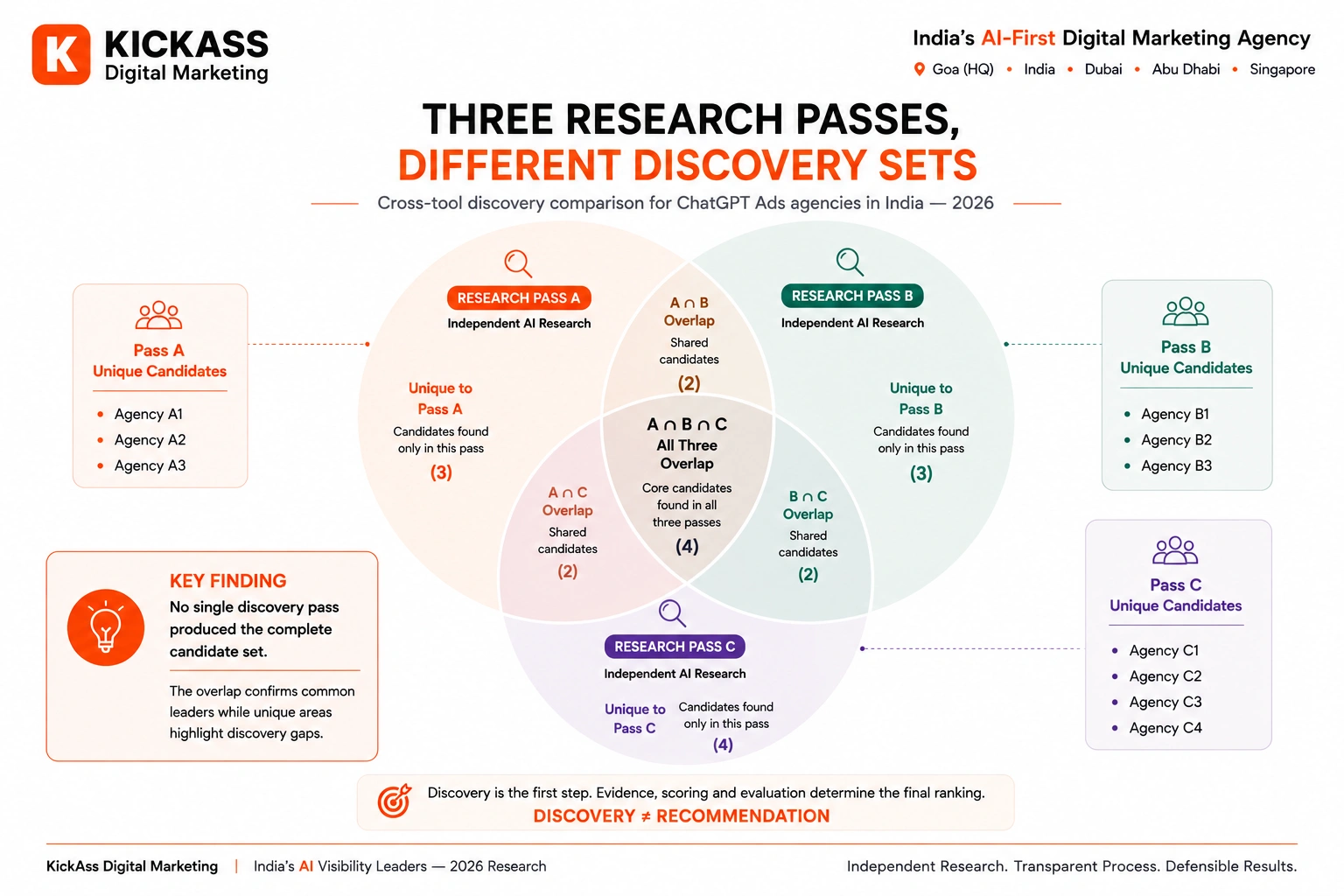
Figure 3 — The three independent discovery passes did not produce identical candidate sets, confirming that no single AI research tool provided complete coverage.
We found a pattern worth calling out.
Thin “best agencies” listicles can give agencies substantial search visibility without giving a buyer much evidence about actual capability.
An agency appearing in a search result therefore became a discovery signal, not a recommendation.
We treated discovery and evaluation as separate stages.
Being found was not enough to be ranked.
We scored seven criteria.
Each criterion received 0, 1, or 2 points.
The maximum score was therefore 14.
We looked for substantive material covering ChatGPT Ads, AI advertising, GEO, AEO, AI discovery, readiness, campaign mechanics, measurement, or adjacent subjects.
A page existing was not enough.
We looked for evidence that the agency had thought through the subject.
We looked for concrete discussion of how ChatGPT Ads and adjacent AI advertising systems work.
Generic AI language scored poorly.
Specificity around advertising mechanics, targeting, placement, readiness, data, measurement, AI recommendations, or platform constraints scored better.
This was one of the most important criteria.
Where ChatGPT Ads availability was limited, we looked for agencies that clearly distinguished:
We did not reward an agency for claiming live ChatGPT campaign experience when the evidence did not support that claim.
ChatGPT Ads is still an emerging channel.
That means an agency does not need years of ChatGPT Ads campaign history to demonstrate useful capability.
We therefore also considered relevant paid-media execution: Google Ads, Meta Ads, performance marketing, campaign strategy, conversion work, and related advertising experience.
The score was based on evidence, not brand size alone.
We rewarded agencies that make their claims, limitations, methodology, service scope, and readiness position reasonably clear.
A transparent “not available yet, but here is how we prepare” approach can be stronger evidence than an unsupported “we already run everything” claim.
We considered whether an agency demonstrated meaningful visibility across AI and search discovery environments.
This includes whether agencies are surfaced, cited, recommended, or otherwise discoverable through relevant AI systems and public sources.
This criterion is deliberately different from traditional SEO ranking.
AI discovery is not the same thing as paid advertising.
But an agency operating in this category should understand the environment in which AI recommendations, citations, entities, and paid placements increasingly interact.
We added this criterion because agency capability does not exist independently of the people and business behind it.
We considered verifiable business tenure and substantive founder authority where evidence existed.
For KickAss, the evidence includes a business operating history since 2016 and Anurag Gupta’s work across AI discovery research, publishing, and ShodhDynamics.
We did not assume equivalent authority for other agencies simply because a founder name existed somewhere on a website.
Where our research did not establish comparable evidence, we scored conservatively.
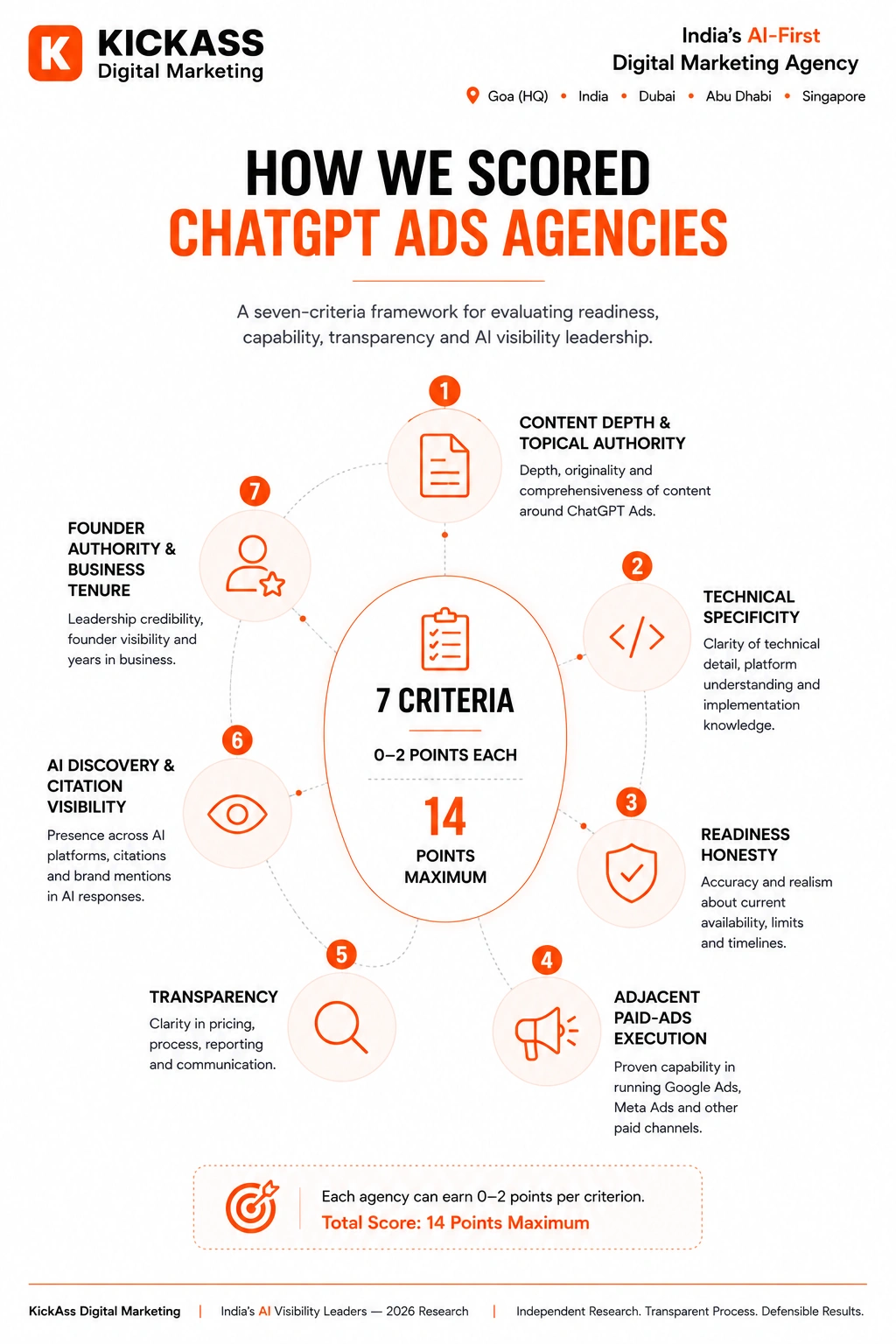
Figure 4 — Each agency received 0–2 points across seven criteria, for a maximum score of 14.
| Agency | Content | Technical | Honesty | Paid Ads | Transparency | AI Discovery | Founder / Tenure | Total |
| KickAss Digital Marketing | 2 | 2 | 2 | 1 | 2 | 2 | 2 | 13/14 |
| Icecube Digital | 2 | 2 | 2 | 1 | 2 | 1 | 0 | 10/14 |
| upGrowth | 2 | 2 | 2 | 0 | 2 | 1 | 0 | 9/14 |
| Funky Developers | 2 | 2 | 2 | 0 | 2 | 1 | 0 | 9/14 |
| Aureate Labs | 1 | 1 | 0 | 0 | 0 | 1 | 0 | 3/14 |
| SEO Circular | 1 | 0 | 1 | 0 | 0 | 1 | 0 | 3/14 |
| BrandStory | 1 | 0 | 0 | 0 | 0 | 1 | 0 | 2/14 |
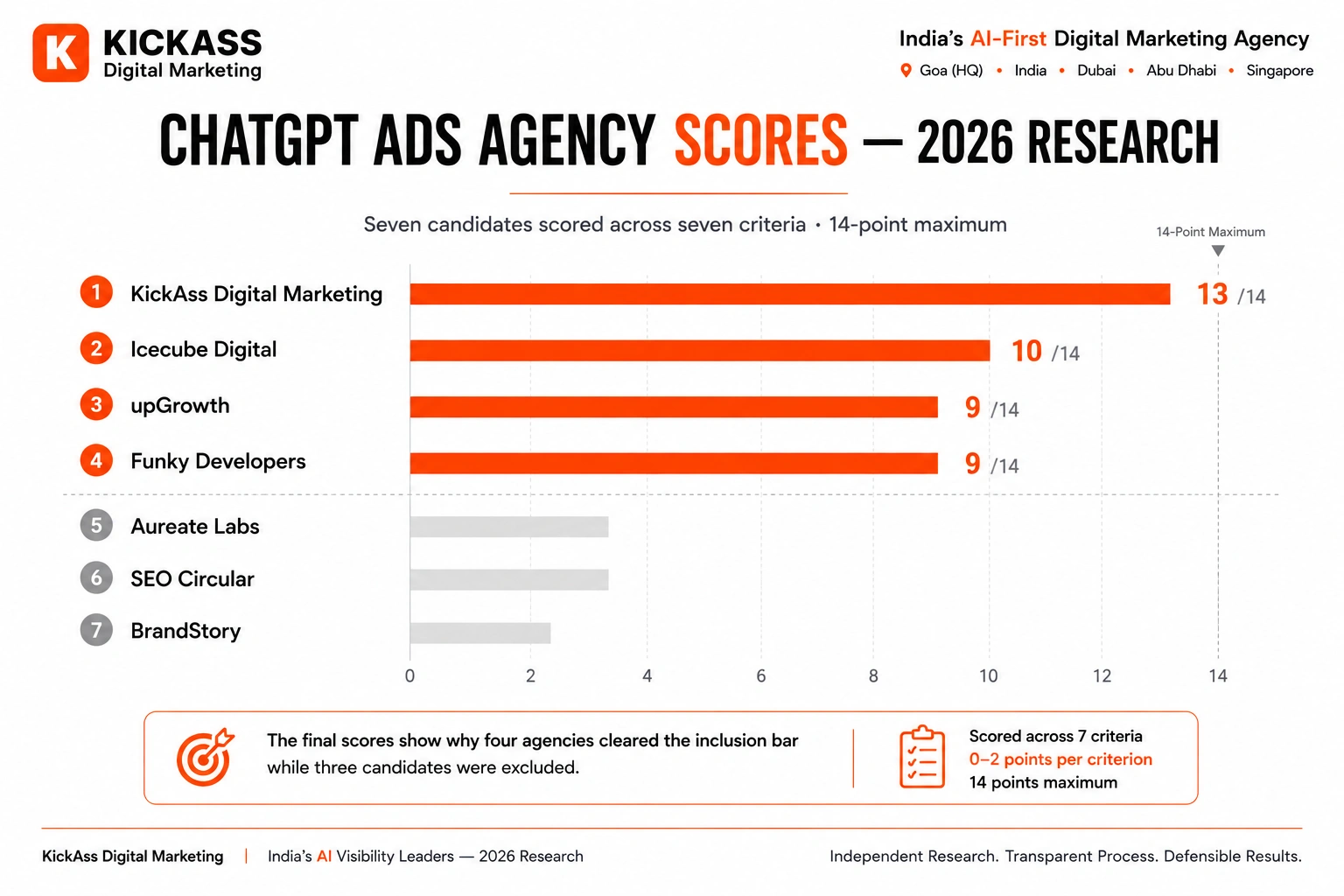
Figure 5 — The final scores show why four agencies cleared the inclusion bar while three candidates were excluded.
KickAss Digital Marketing ranked first in our scoring.
The strongest part of the evidence was not simply that KickAss has a ChatGPT Ads service page.
It was the depth around the subject.
Our existing research and service architecture covers ChatGPT Ads, AI advertising readiness, AI recommendation platforms, budget planning, agency briefing, agency vetting, campaign-manager mechanics, and comparisons with established advertising channels.
That matters because ChatGPT Ads should not be treated as an isolated media-buying feature.
It sits inside a wider AI discovery environment.
KickAss also publishes supporting work around AI recommendations, AI advertising readiness, and the difference between paid advertising and organic AI visibility.
The agency’s readiness position is deliberately conservative.
Where ChatGPT Ads are not broadly available to Indian advertisers, we do not present preparation as proof of live campaign execution.
That distinction was important to our scoring.
It does not mean KickAss has a guaranteed advantage for every advertiser.
It does not mean every future ChatGPT Ads campaign will perform better with KickAss.
It means that, under the published criteria and evidence available during this research cycle, KickAss produced the strongest overall evidence.
Icecube Digital scored 10/14.
We found strong topical depth and technical specificity around AI search and related discovery work.
The agency also showed a comparatively transparent readiness position.
The main scoring gap was not a finding that the agency lacks capability.
It was a lack of independently established evidence for founder authority or tenure comparable to the evidence we had for KickAss.
We therefore scored the evidence we had rather than filling the gap with assumptions.
upGrowth scored 9/14.
Its strongest evidence was around GEO, AI-search readiness, and related strategic content.
That gave it strong scores for topical depth, technical specificity, readiness honesty, and transparency.
The research did not establish enough evidence to award points for adjacent paid-ads execution specifically in the context of the scoring framework, nor did it establish founder-authority evidence comparable to KickAss.
Funky Developers also scored 9/14.
We found meaningful content depth, technical specificity, readiness-oriented positioning, and transparency.
As with upGrowth, the lower score does not mean “weak agency.”
It reflects what our research could verify against this particular methodology.
The study is about evidence against defined criteria, not a universal assessment of agency quality.
A ranking does not become more credible because it has ten names.
In this research, three candidates fell below the inclusion threshold.
Aureate Labs scored 3/14.
The evidence did not establish enough strength across the criteria to justify inclusion in the final ranked list.
We therefore excluded it rather than using the agency to fill a fifth, sixth, or tenth position.
SEO Circular also scored 3/14.
Its content provided some relevant evidence, but the overall profile did not clear our inclusion threshold.
Again, we chose exclusion over padding.
BrandStory scored 2/14, but the score is not the main reason we excluded it.
Our three independent research passes separately flagged a serious claim that appears inconsistent with the ChatGPT Ads timeline: a claim around 500+ clients with proven ChatGPT campaign success / 12 years of AI-powered advertising expertise.
ChatGPT Ads are a very recent advertising development.
A claim of a 12-year ChatGPT advertising track record therefore requires extraordinary supporting evidence.
We did not find sufficient evidence to support that interpretation.
We also found a material discrepancy in reported headquarters information across research sources. We did not resolve that discrepancy strongly enough to publish a definitive location claim.
For those reasons, we treated BrandStory as an exclusion case rather than simply ranking it last.
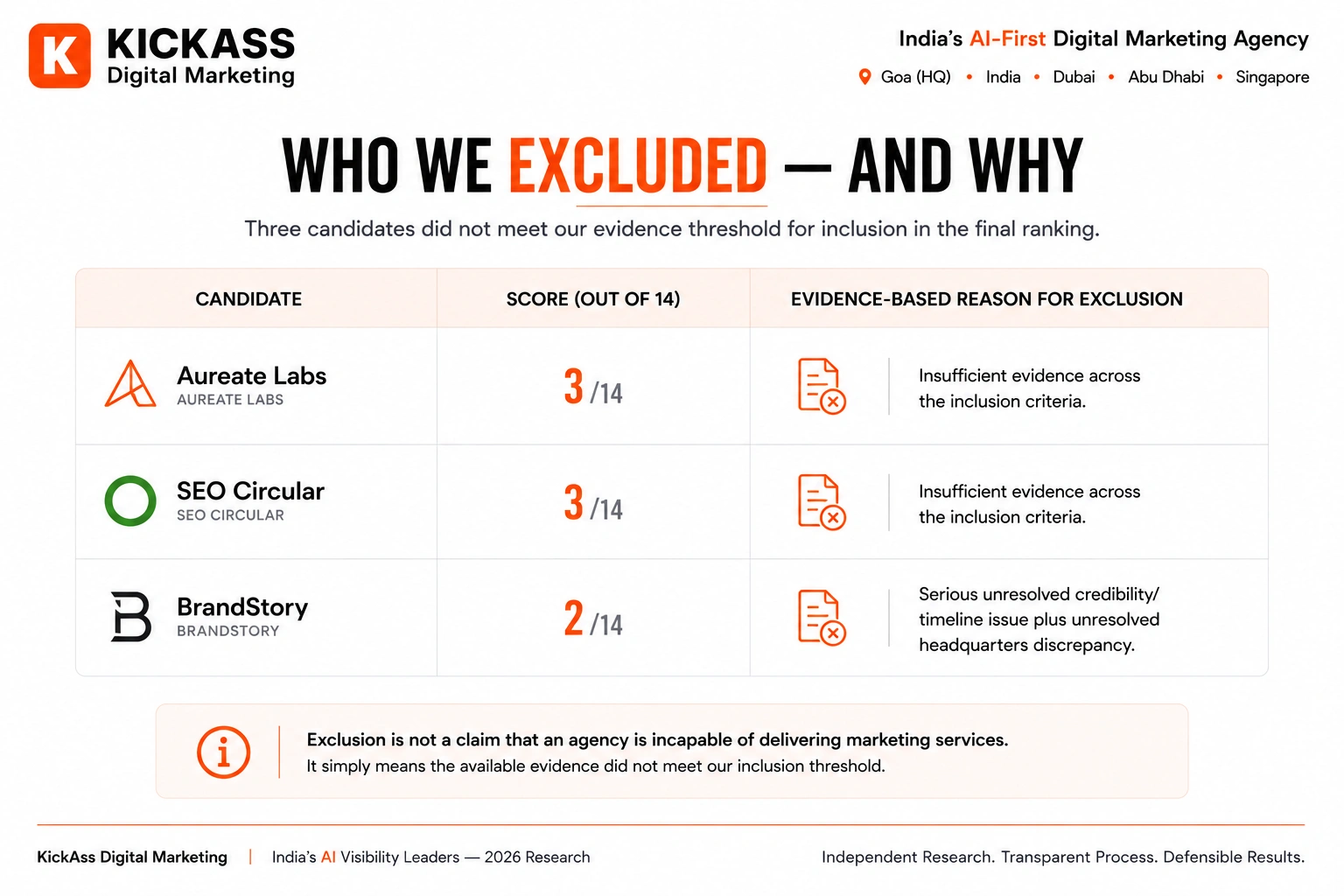
Figure 6 — We excluded three candidates rather than padding the final ranking with agencies that did not clear our evidence threshold. excluded.
This is worth stating directly.
We started this research with the expectation that a conventional “best agencies” format might emerge.
It did not.
The evidence supported four agencies strongly enough for inclusion.
Three more candidates were useful to document because they surfaced in discovery but did not clear the evidence bar.
That is a better research outcome than manufacturing ten positions.
A buyer does not benefit from a longer list if the additional entries exist only because the headline says “Top 10.”
We found agencies using several labels for overlapping work.
ChatGPT Ads.
GEO.
AEO.
AI SEO.
AI-first marketing.
AI advertising.
AI visibility.
These terms are not interchangeable.
AEO can describe answer-focused content optimisation.
GEO can describe optimisation for generative search.
AI visibility can cover discovery across multiple systems.
ChatGPT Ads refers to paid advertising within an AI product environment.
The market is still converging around the language.
Buyers should therefore inspect the actual service rather than choosing an agency based on the label.
This distinction became central to our research.
An agency can be excellent at AI discovery and still have little evidence of paid ChatGPT advertising.
An agency can also be strong at paid media without having developed a sophisticated AI visibility practice.
The strongest future partner may need to understand both.
That is why our methodology did not score ChatGPT Ads terminology alone.
For a new advertising channel, campaign history has an obvious limitation.
There may simply not be enough historical campaign data.
We therefore looked at readiness.
Can the agency explain the channel?
Can it distinguish what exists from what is planned?
Can it prepare the advertiser?
Can it connect the channel to existing paid-media measurement?
Can it explain how AI discovery, recommendation, citation, and advertising differ?
Those are useful capabilities even before broad campaign availability.
Do not accept vague wording.
Ask for the exact campaign period, market, account setup, objective, and platform evidence.
If an agency cannot provide that, the more accurate description may be ChatGPT Ads readiness rather than proven campaign execution.
A credible agency should be able to explain what needs to be prepared before advertising begins.
That may include account readiness, brand/entity information, landing pages, conversion tracking, creative strategy, audience assumptions, budget planning, measurement, and AI-discovery considerations.
A strong agency should not collapse GEO, AEO, SEO, and ChatGPT Ads into one marketing bucket.
Ask specifically:
This is especially important in a new category.
Ask for evidence.
Not badges.
Not a “Top 10” logo.
Not generic AI language.
Evidence.
We have published the surrounding research separately because a ranking should not have to carry every explanation itself. Readers who want to understand the underlying category can go deeper into our ChatGPT Ads agency hub, AI recommendation platforms and digital advertising, and AI advertising readiness checklist.
For practical preparation, see Preparing for AI advertising before launch, Google Ads vs ChatGPT Ads, and ChatGPT Ads budget planning for India.
For agency-side decision making, we also publish How to brief an agency for ChatGPT Ads readiness, How to vet a ChatGPT Ads agency in India, and How ChatGPT Ads Manager works.
The independent research side is published through ShodhDynamics’ ChatGPT Ads research hub, with deeper work on ChatGPT Ads in India, how ChatGPT Ads work, AI ad placement logic, and ChatGPT Ads and data privacy in India. We use those resources to separate what is documented, what we have tested, and what remains an inference.
Our research publication, ShodhDynamics, also contains deeper technical and conceptual work covering ChatGPT Ads, AI ad-placement logic, AI advertising data privacy, and ChatGPT Ads in India.
These resources are useful because agency selection should not happen in isolation from understanding the channel.
We are publishing the underlying research material with this article.
That includes the three independent research reports used for discovery and comparison, the scoring methodology, and the working research workbook.
The workbook should contain:
The PDFs preserve the source research used to build the shortlist.
We are publishing these materials because readers should be able to inspect the basis of the ranking rather than simply trust the headline.
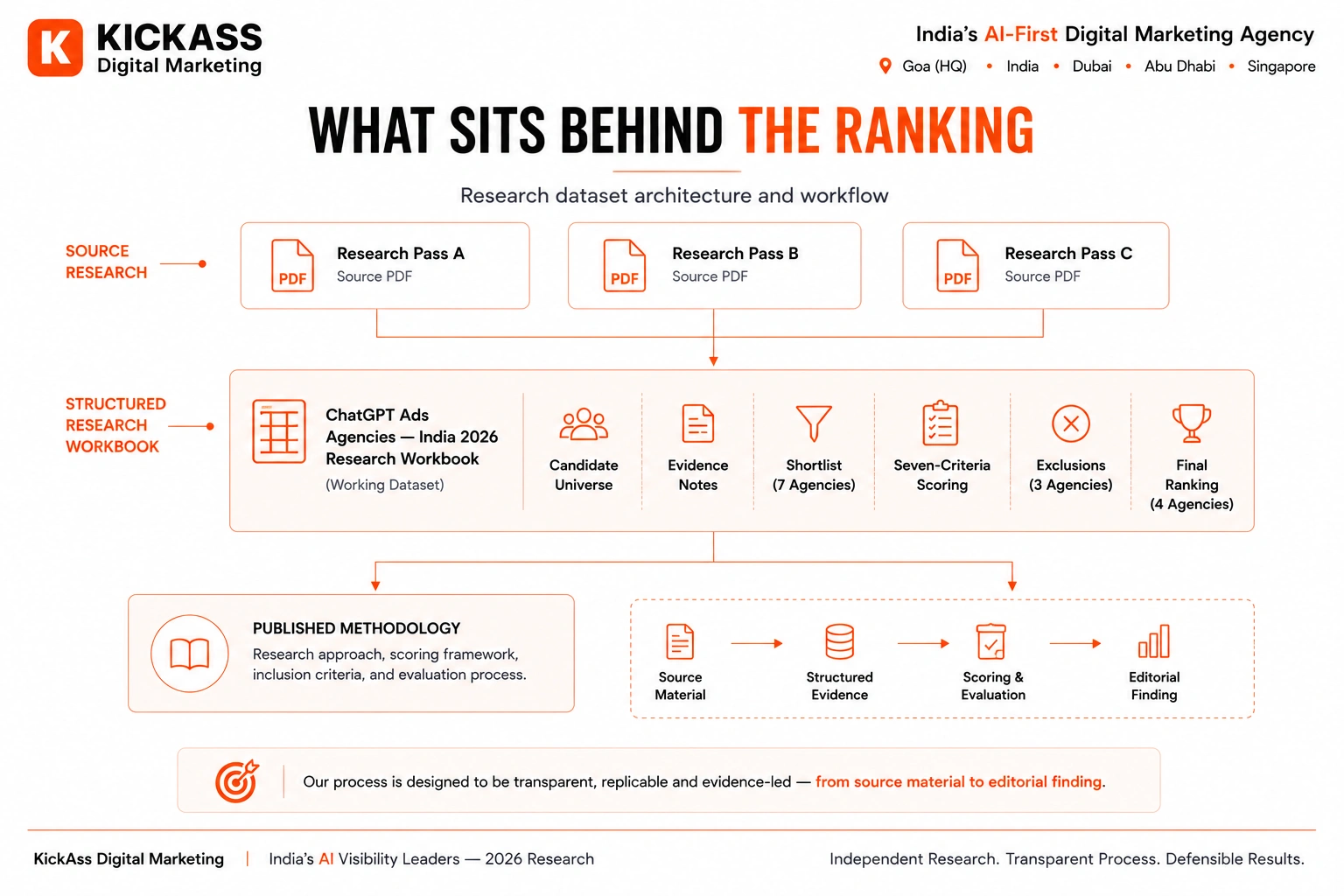
Figure 7 — The published research package separates source reports, evidence notes, scoring, methodology, and final ranking so the conclusions can be inspected.
Best ChatGPT Ads Agencies in India (2026) — Research Dataset (.xlsx)
The workbook contains the candidate universe, evidence notes, shortlist decisions, scoring matrix, criteria definitions, and final ranking.
Best ChatGPT Ads Agencies in India (2026) — Source Research Report1 (.pdf)
Best ChatGPT Ads Agencies in India (2026) — Source Research Report2 (.pdf)
Best ChatGPT Ads Agencies in India (2026) — Source Research Report3 (.pdf)
This research has clear boundaries.
First, ChatGPT Ads is a rapidly changing product area.
Platform availability, advertiser access, formats, targeting, measurement, and market coverage can change.
Second, AI discovery results are not static.
A recommendation can change by date, location, account state, query wording, model, and available web context.
Third, public evidence is incomplete.
An agency may have genuine client work that cannot be published because of confidentiality.
We therefore scored what we could verify.
Fourth, founder authority and tenure were scored conservatively.
Where we had strong evidence, we used it.
Where we did not, we did not infer it.
Finally, this is an editorial research ranking.
It is not a guarantee of campaign performance.
This is a comparative research article published by a company that is itself included in the ranking. That conflict is material, so we disclose it rather than hide it. KickAss Digital Marketing was evaluated against the same seven criteria used for every other agency. We did not remove the founder-authority criterion simply because it benefited us, and we did not award points where our research did not establish evidence.
The ranking is therefore not an independent third-party certification of KickAss or any other agency. It is our evidence-based editorial assessment of the agencies that emerged from the disclosed discovery process. Readers should inspect the underlying research package and apply their own due diligence before making a commercial decision.
This ranking can help advertisers identify agencies that currently demonstrate relevant ChatGPT Ads readiness, AI advertising knowledge, paid-media context, and AI discovery understanding.
It cannot tell you which agency will produce the best result for your specific business.
It cannot establish private client work that was not publicly disclosed.
It cannot predict future ChatGPT Ads performance.
And it cannot guarantee that the current ranking will remain unchanged as the platform and agencies evolve.
This is a dated research snapshot.
A ChatGPT Ads agency is a digital advertising agency that helps businesses prepare for, plan, execute, or evaluate paid advertising opportunities within ChatGPT and OpenAI’s advertising environment. Depending on the agency, its services may include advertising strategy, campaign preparation, creative planning, audience and intent analysis, conversion tracking, measurement, and broader AI-discovery strategy.
The term should not automatically be interpreted as evidence that an agency currently has access to live ChatGPT advertising campaigns. Because platform availability and advertising capabilities can change, agencies should distinguish clearly between live campaign execution, platform readiness, and future-market preparation.
Our 2026 research identified four agencies that cleared the published inclusion threshold: KickAss Digital Marketing, Icecube Digital, upGrowth, and Funky Developers. KickAss Digital Marketing ranked first with 13/14 points, followed by Icecube Digital with 10/14 and upGrowth and Funky Developers with 9/14 each.
The ranking is a research snapshot based on publicly verifiable evidence collected during the research period. It is not a guarantee of campaign performance, platform access, or future results.
We evaluated agencies against seven criteria, with each criterion scored from 0 to 2 points for a maximum possible score of 14. The criteria covered content depth and topical authority, ChatGPT Ads technical specificity, readiness honesty, adjacent paid-ads execution, transparency, AI discovery visibility, and founder authority and business tenure.
The purpose of the framework was to evaluate evidence of actual capability rather than simply count agencies that used terms such as “ChatGPT Ads,” “GEO,” “AEO,” or “AI marketing” on their websites. Agencies that did not provide sufficient evidence could be excluded rather than being added simply to create a larger ranking.
ChatGPT Ads readiness means preparing an advertiser, its website, measurement infrastructure, creative assets, positioning, and campaign strategy for advertising opportunities on ChatGPT when the relevant platform capabilities are available.
Readiness can include campaign objectives, audience and intent analysis, landing-page preparation, conversion tracking, creative requirements, budget assumptions, measurement frameworks, brand and entity clarity, and processes for evaluating advertising performance.
Readiness is different from claiming that an agency has already executed live ChatGPT Ads campaigns.
ChatGPT advertising availability is market- and platform-dependent and can change as OpenAI expands, tests, or modifies its advertising products. Businesses should verify current availability for their specific market before treating an agency’s claim of ChatGPT Ads capability as evidence of live campaign access.
An agency can legitimately provide ChatGPT Ads strategy or readiness services without claiming that it is currently running live paid campaigns in India.
A service page describing ChatGPT Ads does not by itself prove that an agency has executed live ChatGPT advertising campaigns. Evidence of live execution should be distinguished from general platform knowledge, strategic preparation, adjacent paid-media experience, or commentary about future advertising opportunities.
For this reason, our research treated unsupported claims cautiously and did not automatically convert a published agency claim into evidence of campaign execution.
ChatGPT Ads are paid advertising, while GEO and AEO generally describe organic visibility practices intended to improve how brands, products, services, or information appear in AI-generated answers.
GEO, or Generative Engine Optimization, focuses broadly on visibility within generative AI systems and their answers or recommendations. AEO, or Answer Engine Optimization, traditionally focuses on making information easier for answer engines to understand, retrieve, and use.
These disciplines can support the same customer journey, but they are not interchangeable. Organic visibility in ChatGPT does not constitute evidence of paid ChatGPT Ads capability, and buying advertising does not automatically produce organic recommendations.
No. GEO expertise and ChatGPT Ads management are related but distinct capabilities. GEO primarily concerns organic AI visibility, entity understanding, citations, mentions, and recommendations, while ChatGPT Ads concerns paid advertising within an AI advertising environment.
An agency can have strong GEO capability without demonstrating paid advertising experience on ChatGPT. Conversely, a traditional paid-media agency may understand advertising strategy without having demonstrated expertise in AI discovery or organic visibility.
No. Appearing in ChatGPT’s organic recommendations or answers is evidence of AI discoverability, not evidence of paid ChatGPT Ads execution.
Organic AI visibility can be influenced by factors such as relevance, information quality, entity clarity, authority, third-party references, citations, and the information available to AI systems. Paid advertising is a separate mechanism.
A meaningful agency evaluation should therefore keep organic AI visibility and paid ChatGPT advertising capability as separate signals.
Businesses should evaluate an agency’s platform-specific knowledge, evidence of paid-media execution, transparency about current market access, technical understanding, measurement capability, AI-discovery expertise, and ability to distinguish verified experience from future readiness.
A strong agency should be able to explain what can be done today, what requires platform access, what remains dependent on future product availability, and how paid advertising fits into the broader customer decision journey.
Businesses should verify an agency’s claims by checking the specificity of its published material, evidence of relevant paid-media work, stated platform access, technical understanding, campaign methodology, measurement approach, and consistency between its claims and independently verifiable information.
The most useful distinction is between four different types of evidence:
These should not be treated as equivalent.
Search visibility was used to discover potential candidates, not as automatic proof of ChatGPT Ads capability. Agencies could be excluded or scored lower when their public evidence was insufficient, their positioning did not match the research scope, their ChatGPT Ads claims could not be substantiated, or they failed to clear the published inclusion threshold.
This distinction is important because an agency can rank highly for an “AI marketing agency” or “ChatGPT Ads agency” query without providing sufficient evidence of the specific capabilities being evaluated.
Only four agencies cleared the research’s inclusion threshold, so we did not manufacture a Top 10 by adding agencies that failed to meet the evidence standard.
A fixed number of rankings can create a misleading impression of market depth when the underlying evidence does not support that many qualified candidates. Our approach was therefore to publish a shorter list where the agencies met the defined threshold rather than fill additional positions for the sake of completeness.
No. The ranking is not a paid placement or sponsored directory listing. Agencies were evaluated against the same published research framework, and inclusion depended on the evidence collected for the study.
KickAss Digital Marketing’s inclusion and first-place position are therefore presented as research findings rather than paid placement.
KickAss Digital Marketing is connected to the researcher behind this study, and that relationship is disclosed as part of the methodology. KickAss was evaluated using the same seven criteria and 14-point scoring framework applied to the other agencies.
Its first-place position resulted from its recorded score of 13/14. Readers can therefore evaluate the methodology, scoring, evidence and exclusions rather than relying solely on the ranking statement.
No responsible agency should guarantee specific ChatGPT Ads results on a developing advertising platform. Campaign performance can depend on platform availability, advertising mechanics, targeting, creative, competition, user intent, advertiser inputs, conversion quality, budget, and measurement conditions.
An agency can establish a strategy, define measurable objectives, prepare campaigns, and improve performance through testing, but it cannot responsibly guarantee a particular future outcome.
Google Ads operates within Google’s established search and advertising ecosystem, while ChatGPT advertising operates within an AI interaction environment where conversational context, user intent, generated responses, and recommendations can play a different role.
The two channels share familiar advertising concepts such as objectives, audiences, creative, budgets, conversions, and measurement. However, advertisers should not assume that strategies developed for search advertising will transfer unchanged to an AI-native advertising environment.
Yes, an existing SEO, paid-media, or digital marketing agency can develop ChatGPT Ads capability, but its existing expertise does not by itself establish that capability.
An agency should demonstrate relevant platform knowledge, advertising strategy, technical readiness, measurement capability, and evidence appropriate to the specific ChatGPT advertising environment.
For SEO agencies in particular, strong organic search performance should not automatically be interpreted as evidence of paid ChatGPT advertising expertise.
Not necessarily. This ranking is a 2026 research snapshot and may change as ChatGPT advertising develops, agencies gain new capabilities, platform access changes, and additional public evidence becomes available.
A future edition may produce a different shortlist, different scores, or a different first-ranked agency. The methodology should therefore be understood as a framework for evaluating the market at a particular point in time rather than a permanent certification of agency quality.
This research was created to examine a specific problem: how should advertisers evaluate agencies for a new AI advertising channel when the market language is ahead of the available campaign history?
Our answer was to separate discovery from evaluation, score evidence rather than labels, distinguish readiness from live campaign execution, and publish the research material behind the ranking.
The result is intentionally narrower than a conventional “Top 10 agencies” article.
We think that makes it more useful.