Get Marketing Insights First
Subscribe to receive actionable strategies, growth tips, and industry insights delivered straight to your inbox.

Real estate ranks dead last of all tracked industries for AI Overview visibility — and luxury developers are spending the most to reach buyers who've already moved past the channels that spend targets. Here's the technical fix, and the metric that actually measures it.
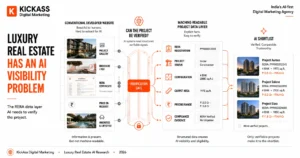
Most luxury project websites are built as visual brochures — heavy on photography, light on machine-readable data. AI systems can’t extract RERA status, verified pricing, or compliance history from a photo gallery, so they exclude the project from consideration entirely rather than ranking it lower.
Cost Per Qualified Site Visit (CPQSV) — because AI-referred buyers arrive pre-qualified, having already compared projects and formed a shortlist before any human contact. Raw lead volume from ad forms measures the wrong thing once AI search is the primary discovery channel.
Both. A 2026 industry report found real estate ranks last of all tracked verticals for AI Overview trigger rate, in the U.S. market specifically. Our own research points to the same structural gap in Indian luxury real estate, worsened by RERA compliance data being visually embedded rather than machine-readable.
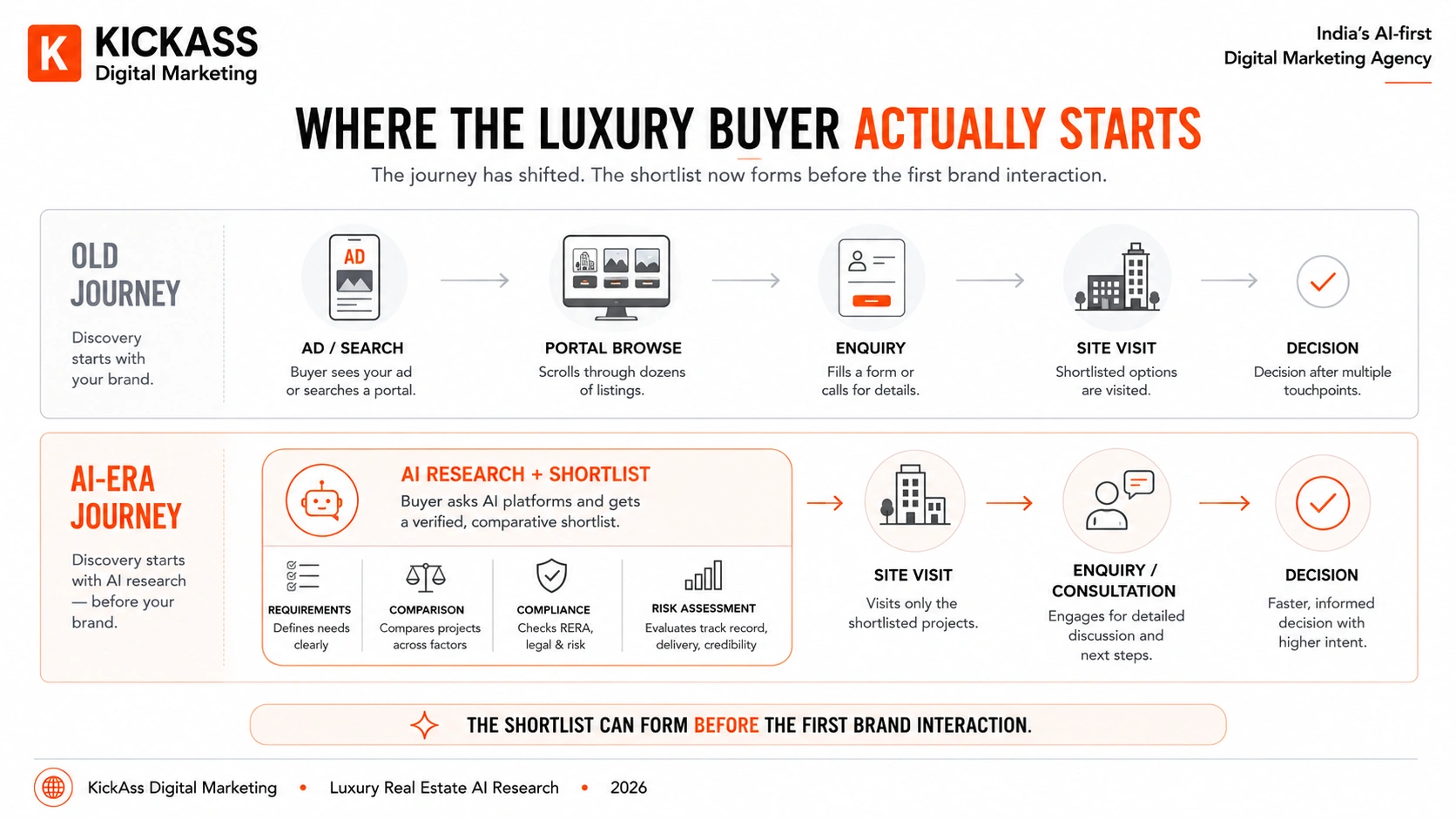
Figure 1: A scanned RERA certificate is invisible to AI crawlers; the same registration number embedded in schema markup is instantly verifiable.
A 2026 industry report from Haute Living and 5W Public Relations, testing luxury markets across the U.S., found real estate ranked last among all tracked industries for AI Overview trigger rate — despite 82% of agents already using AI tools daily in their own workflows. The gap isn’t adoption. It’s that almost none of that AI use is aimed at making the brand itself discoverable when a buyer asks an AI platform who to trust.
The same structural gap shows up in Indian luxury real estate, for a specific and fixable reason: developer websites are built as visual brochures. Heavy photography, immersive galleries, ambient video — genuinely effective for a human scrolling on a phone, and functionally invisible to an AI system trying to extract RERA status, verified carrying, or compliance history. The content exists. The AI simply can’t parse it.
As our Real Estate AI Marketing Guide covers, entity clarity and cross-source trust are the foundation any real estate business needs regardless of segment. This piece goes one layer deeper — the specific technical architecture luxury developers need on top of that foundation, because HNWI buyer behavior and RERA compliance depth push the requirements further than a standard residential listing does.
Luxury buyers in Mumbai, Delhi-NCR, and Bengaluru increasingly skip the scroll-through-portals stage entirely. Instead of browsing dozens of unverified listings for “luxury 4BHK Gurgaon,” they issue a single, highly specific conversational prompt — RERA status, exact configuration, litigation history, and amenity requirements, all in one query — and expect a synthesized, verified shortlist back.
Three forces are driving this shift specifically in the luxury segment: heavier use of ad-blockers and private browsing among HNWIs, delegated research through executive assistants or family offices who type dense, multi-constraint prompts rather than casual keywords, and — most importantly — an expectation that the AI has already filtered for compliance risk before presenting anything. A generic Google Ad or a Meta carousel simply isn’t built to answer a query with six embedded constraints. An AI system that can query structured project data is.
AI systems prioritize verification over promotion. In India, RERA is the authoritative compliance layer, and most developer sites still treat their RERA registration as a static footer image or a scanned certificate — unreadable by any AI crawler.
The fix is to bind RERA data directly into the page’s structured markup rather than its visual design:
{
  "@context": "https://schema.org/",
  "@type": "ApartmentComplex",
  "name": "Example Luxury Residences",
  "identifier": {
    "@type": "PropertyValue",
    "name": "RERA Registration Number",
    "value": "P99000012345"
  },
  "additionalProperty": [
    {
      "@type": "PropertyValue",
      "name": "Construction Stage",
      "value": "Structural Completion"
    },
    {
      "@type": "PropertyValue",
      "name": "Occupancy Certificate Target",
      "value": "2027-06"
    }
  ]
}
Project milestones — excavation, structural completion, internal finishing, occupancy certificate timelines — should exist as explicit, dated text tables somewhere a crawler can read them, not only inside a downloadable brochure PDF. This is the same principle behind llms.txt: giving AI crawlers a clean, structured summary of exactly the facts they need to verify you, rather than forcing an inference from a rendered visual layout.
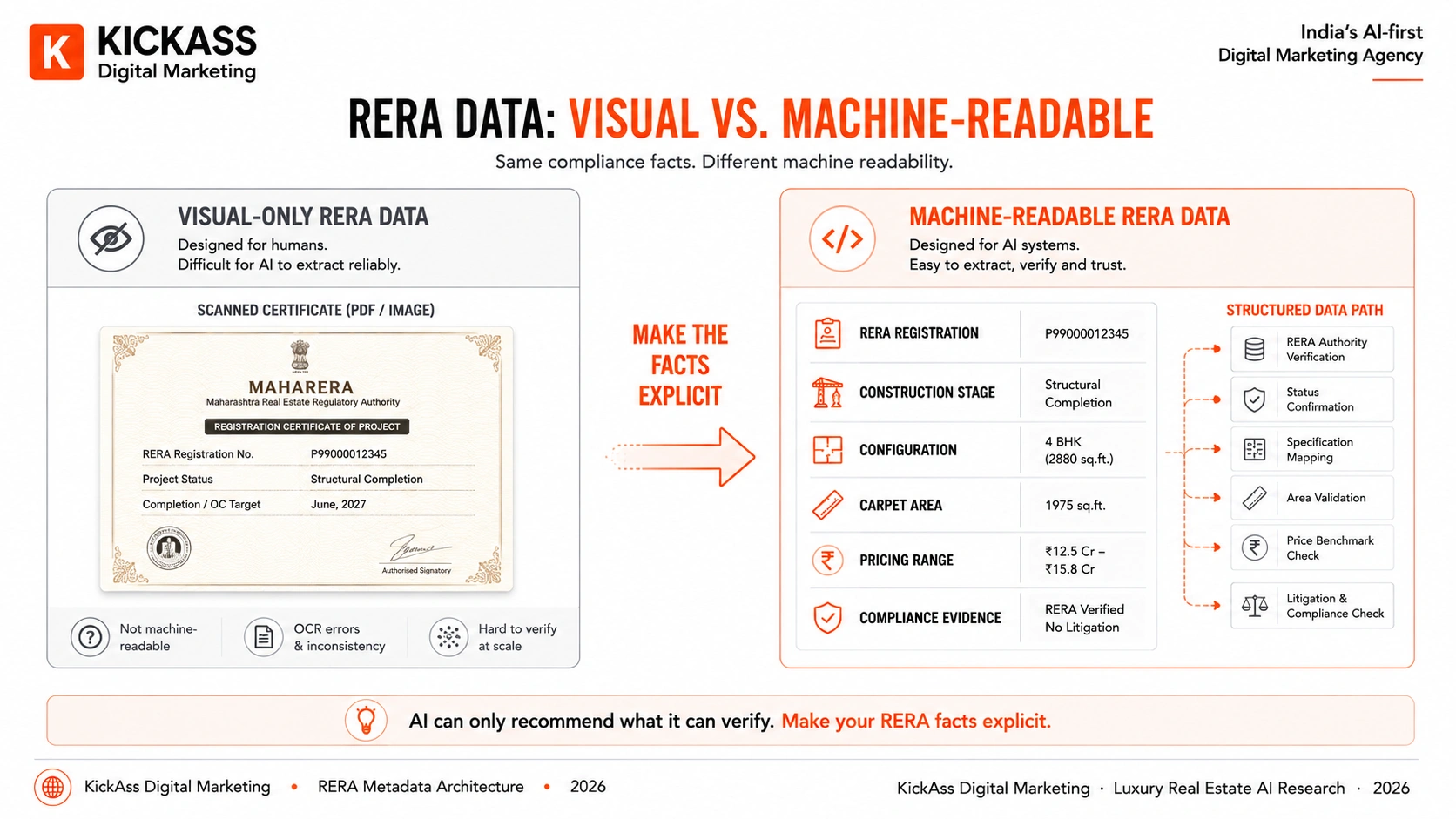
Figure 2: A scanned RERA certificate is invisible to AI crawlers; the same registration number embedded in schema markup is instantly verifiable.
Concealed pricing — “Price on Request” — is a long-standing luxury sales tactic built around a human conversation. It’s also a disqualifying variable for an AI engine trying to match a buyer’s explicit budget constraint against a shortlist. If your pricing exists only behind a form-fill gate, most AI systems simply exclude the project from consideration rather than guessing.
The practical fix is machine-readable inventory data: carpet area using the RERA-mandated definition specifically (not super built-up area, which creates a mismatch AI systems increasingly flag as inconsistent), configuration types, loading factors, and a genuine base-pricing bracket, all expressed in consistent units across the domain. Consistency matters as much as completeness — an AI system doing a direct numeric comparison across projects will simply drop the input it can’t parse cleanly against the others.
AI systems synthesize across court records, news coverage, and consumer forums, not just your own site. If a developer or project name appears frequently alongside ambiguous legal disputes anywhere on the public web, AI systems tend to flag or quietly downrank the project in a recommendation — even when the underlying dispute is resolved or immaterial.
The counter to that isn’t suppression; it’s a proactively documented, transparent legal footprint hosted directly on your own domain — clear-title documentation, environmental clearances, and land-ownership history presented as primary-source material. This gives an AI crawler an authoritative document to cite directly, rather than leaving it to synthesize an ambiguous picture from third-party forum noise. It’s the same logic behind our documented Liability Wall pattern across AI platforms generally — in high-risk categories, AI defaults to caution unless it can verify otherwise, and the burden of proof sits with the brand, not the AI.
Traditional real estate marketing measures Cost Per Lead. In the luxury segment specifically, that metric actively misleads. A high-volume Meta lead form produces plenty of cheap, unqualified submissions, which inflates the human verification cost downstream without moving a single genuine buyer closer to a site visit.
Once AI search becomes the primary discovery layer, the more honest metric is Cost Per Qualified Site Visit (CPQSV) — because a buyer arriving via an AI-synthesized recommendation has typically already compared alternatives, verified compliance status, and formed a shortlist before any human contact happens at all.
| Metric Type | Traditional Marketing | AI-Era Optimization |
|---|---|---|
| Primary KPI | Cost Per Lead (CPL) | Cost Per Qualified Site Visit (CPQSV) |
| Targeting Basis | Demographics, retargeting pixels | High-intent, multi-constraint AI prompts |
| Conversion Focus | Form fills, brochure downloads | Private consultations, confirmed site visits |
| Discovery Channel | Interrupted paid ads | Inclusion in an AI’s synthesized shortlist |
This reframing matters most for the markets where luxury demand concentrates: Mumbai, Delhi, Gurugram, and Bangalore — where ad spend is highest and the discovery-arbitrage gap described above is widest.
Frequently Asked Questions Related to Real Estate AI Visibility
No — it builds on it. Entity clarity, semantic authority, and cross-source trust are the foundation for any real estate business, covered in full in our Real Estate AI Marketing Guide. This piece is the additional technical layer luxury developers specifically need — RERA schema depth, pricing-data structure, and litigation-neutral documentation — on top of that foundation.
The cited report tested U.S. luxury markets specifically. We’re citing it as directional evidence of an industry-wide pattern, not an India-specific statistic — our own observation is that the same structural gap exists here, for the additional reason that RERA compliance data is usually presented visually rather than as machine-readable markup.
Yes — in fact it’s often easier to execute cleanly on one flagship luxury project first, since the RERA schema, pricing structure, and litigation documentation are all project-specific by nature. See how this played out for one Goa developer in our case study on engineering AI discovery for a luxury project.
AI-referred enquiries behave differently from portal leads — they arrive further along in their decision process. Our real estate lead management guide covers how to score and respond to that difference rather than routing every enquiry through the same generic follow-up sequence.
Want to see what AI systems currently say — or fail to say — about your project? Run a check with our AI Discovery Readiness assessment.