Get Marketing Insights First
Subscribe to receive actionable strategies, growth tips, and industry insights delivered straight to your inbox.

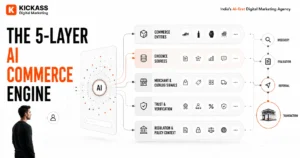
Our 32 first-party tests across ChatGPT, Gemini, Claude and Perplexity suggest that AI commerce in India is not yet a seamless transaction layer. AI platforms increasingly act as discovery, comparison and referral systems — while higher-risk categories introduce stronger verification and caution. The 5-Layer AI Commerce Engine maps this behavior across Discovery, Referral, Advertising, Transaction and Regulatory/Trust Verification.
The biggest fear around AI commerce is that conversational AI will eliminate the website.
The assumption is straightforward: a buyer asks ChatGPT, Gemini, Claude or Perplexity what to buy; the AI recommends a product; the AI completes the transaction; the brand’s website becomes irrelevant.
Our first-party research points to a different and more useful problem.
Across 32 tests spanning ChatGPT, Gemini, Claude and Perplexity, covering eight consumer and high-consideration categories in India, we found that the AI commerce journey is still largely a discovery, evaluation and referral journey — not a native transaction journey.
At the same time, the way AI platforms handle commercial recommendations changes substantially with the category.
Low-risk products can produce rich product cards, prices, ratings and merchant links. Higher-risk categories such as insurance and real estate tend to produce more cautious, criteria-based responses and greater emphasis on regulatory, policy or market information.
That creates a different strategic problem for brands.
You are not simply trying to rank a webpage.
You are trying to become an entity that an AI system can discover, evaluate, trust and confidently refer.
This research introduces the 5-Layer AI Commerce Engine to describe that architecture.
It also introduces two terms:
The 5-Layer AI Commerce Engine is a framework for understanding AI-mediated commerce across five dimensions: Discovery, Referral, Advertising, Transaction, and Regulatory/Trust Verification. The first-party research behind the framework found that these dimensions do not operate as a simple linear funnel.
The Transaction Gap is the difference between an AI platform’s ability to help a buyer discover, compare and select products and its ability to complete a native transaction inside the AI interface. In our India tests, the transaction handoff remained external across the tested scenarios.
Traditional SEO focuses primarily on webpage visibility and relevance. AI-mediated discovery adds entity understanding, evidence, structured information, external authority and the ability of an AI system to confidently recommend an entity.
Traditional SEO is no longer sufficient for AI-mediated discovery because an AI recommendation requires more than a webpage being relevant to a keyword. The system must be able to identify, interpret, compare and justify the entity it recommends.
Traditional SEO was built around a relatively clear competition model:
query → search engine → ranked pages → click
AI-mediated discovery is different.
A conversational system can synthesize information from product feeds, web search, merchant data, official documents, reviews, comparison sites and its own model knowledge. The output is not a list of ten pages. It is a synthesized answer containing a smaller consideration set.
That changes the commercial question.
Instead of asking only:
“How do we rank this page?”
brands increasingly need to ask:
“What evidence does an AI system need in order to understand, verify and recommend this entity?”
Our research does not expose a universal AI ranking algorithm — and no responsible research should claim that it does.
That evidence boundary is the reason we use the KickAss BASE™ Model for SEO & AI Search alongside this commerce framework. BASE™ separates what should remain part of the SEO foundation from what the AI environment genuinely adds, what still needs to be studied, and what should be excluded as an unsupported assumption. The 5-Layer AI Commerce Engine answers a different question: where AI now participates in discovery, referral, advertising, transaction and trust verification.
What it does show is that the inputs used to construct recommendations differ materially across platforms and categories.
For a consumer product, those inputs may include price, specifications, availability, ratings and merchant information.
For insurance, the model may discuss policy wording, exclusions, insurer information, regulatory material and comparison sources.
For real estate, the response may involve project information, listings, market data, developer history and regulatory information.
The optimization problem therefore expands from page visibility to entity readiness.
The Transaction Gap is the structural divide between AI’s ability to influence a purchase and its ability to complete that purchase natively inside the AI interface in a particular market.
To pressure-test this, we conducted 32 cross-platform scenarios across four AI platforms:
The tests covered eight categories:
The commercial intent ranged from relatively low-consideration consumer products to high-value, regulated purchases.
The clearest finding was consistent across the tested Indian scenarios:
We did not observe native in-chat checkout or booking completion in the 32 tested environments. Instead, the user remained responsible for completing the purchase or inquiry outside the AI interface.
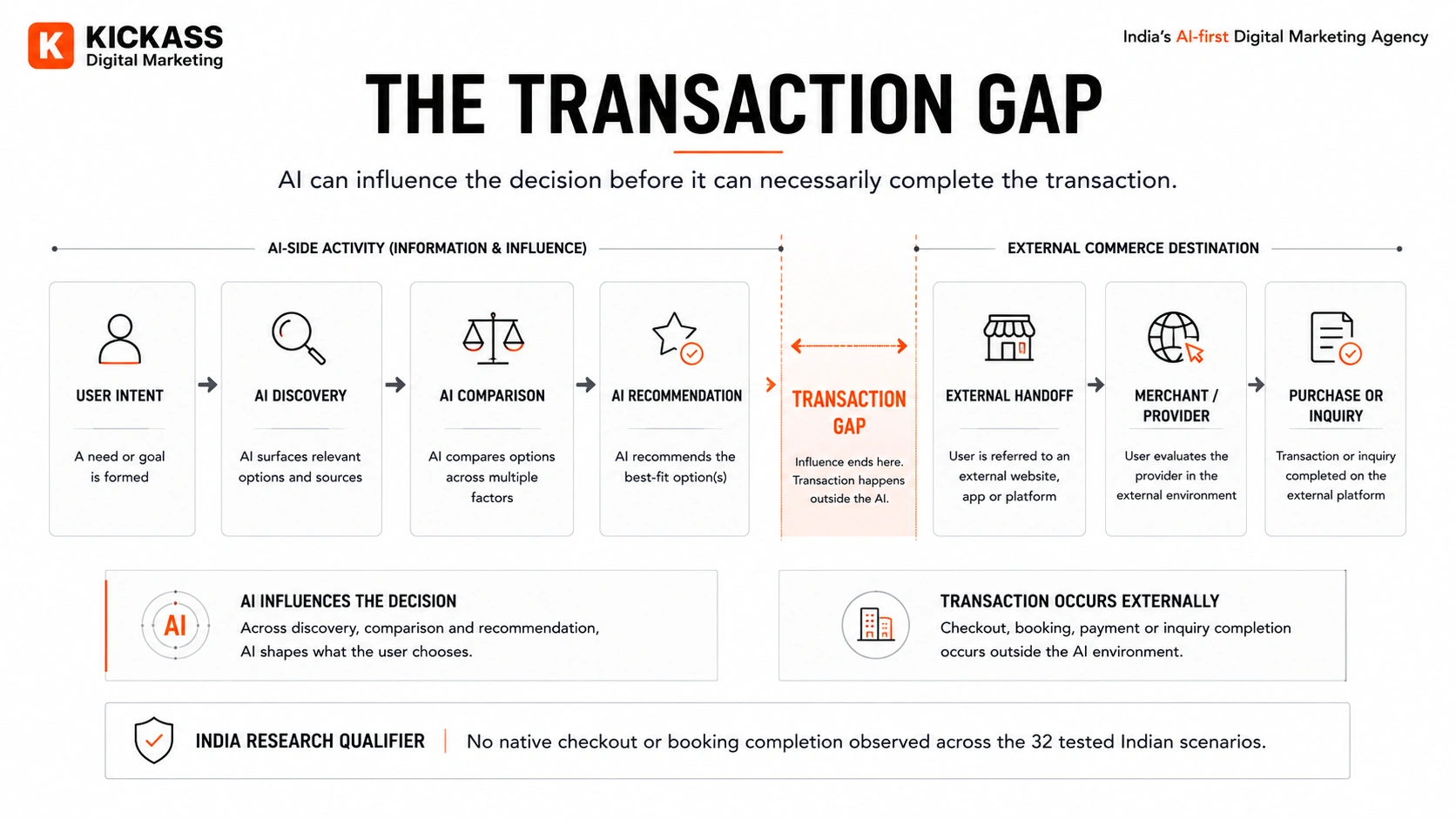
Figure 2- The Transaction Gap describes the distance between AI’s ability to influence a purchase decision and its ability to complete that transaction natively in the tested market.
That does not mean AI commerce is irrelevant.
It means the current commercial opportunity is different from the fully autonomous checkout narrative.
The AI can still influence the most valuable part of the journey:
what enters the buyer’s consideration set.
A buyer who arrives at a merchant site after an AI recommendation is not necessarily starting a conventional search journey.
The AI may already have:
The external click can therefore be a decision-ready referral, rather than a conventional search click.
That is the commercial significance of the Transaction Gap.
The Liability Wall describes a behavioral shift in AI responses as financial, medical, legal or regulatory risk increases.
In conventional commerce, the journey is often represented as a sequence:
Discovery → Advertising → Referral → Transaction
AI commerce is less linear.
Our tests showed a visible difference between low-consideration retail products and higher-consideration or regulated categories.
For products such as moisturizers, earbuds, appliances and laptops, the tested systems could provide:
ChatGPT and Gemini were particularly capable of producing richer product-oriented interfaces in the tested retail scenarios.
Insurance and real estate produced materially different response patterns.
Instead of simply saying:
“Buy this one.”
the systems were more likely to:
This is what we call the Liability Wall.
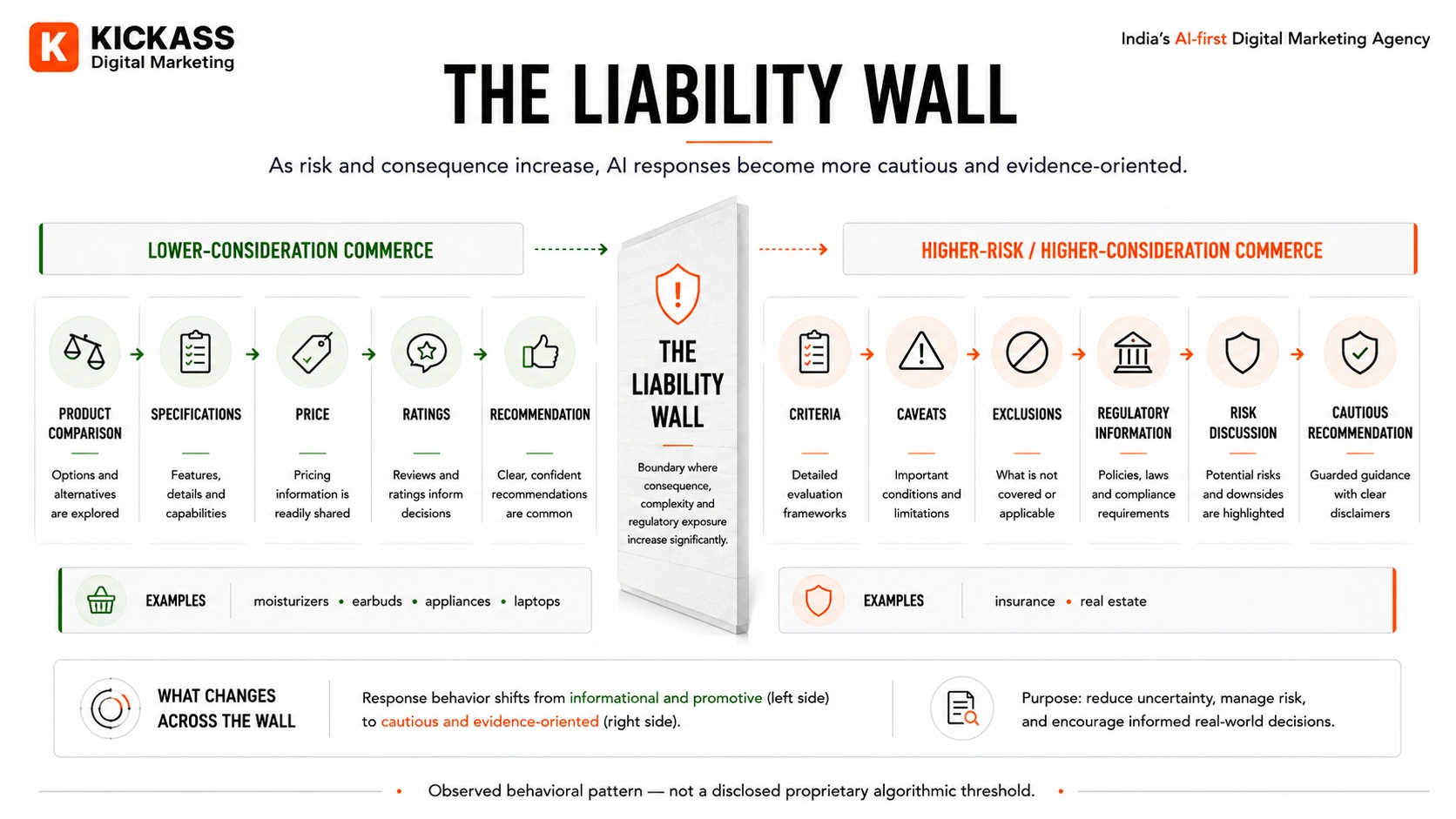
Figure 3– The Liability Wall describes the observed shift from product-oriented recommendations toward more cautious, criteria-based guidance as commercial risk and complexity increase.
The term does not mean we have discovered a literal internal algorithmic threshold inside these models.
It describes the observable behavioral boundary where increased risk corresponds with more defensive and criteria-based recommendation behavior.
That distinction matters.
The research demonstrates the behavior.
It does not reveal the proprietary internal mechanism that causes it.
The 5-Layer AI Commerce Engine combines three journey phases with two intersecting operational dimensions: Discovery, Referral and Transaction form the core journey, while Advertising and Regulatory/Trust Verification interact with it.
The model is deliberately non-linear.
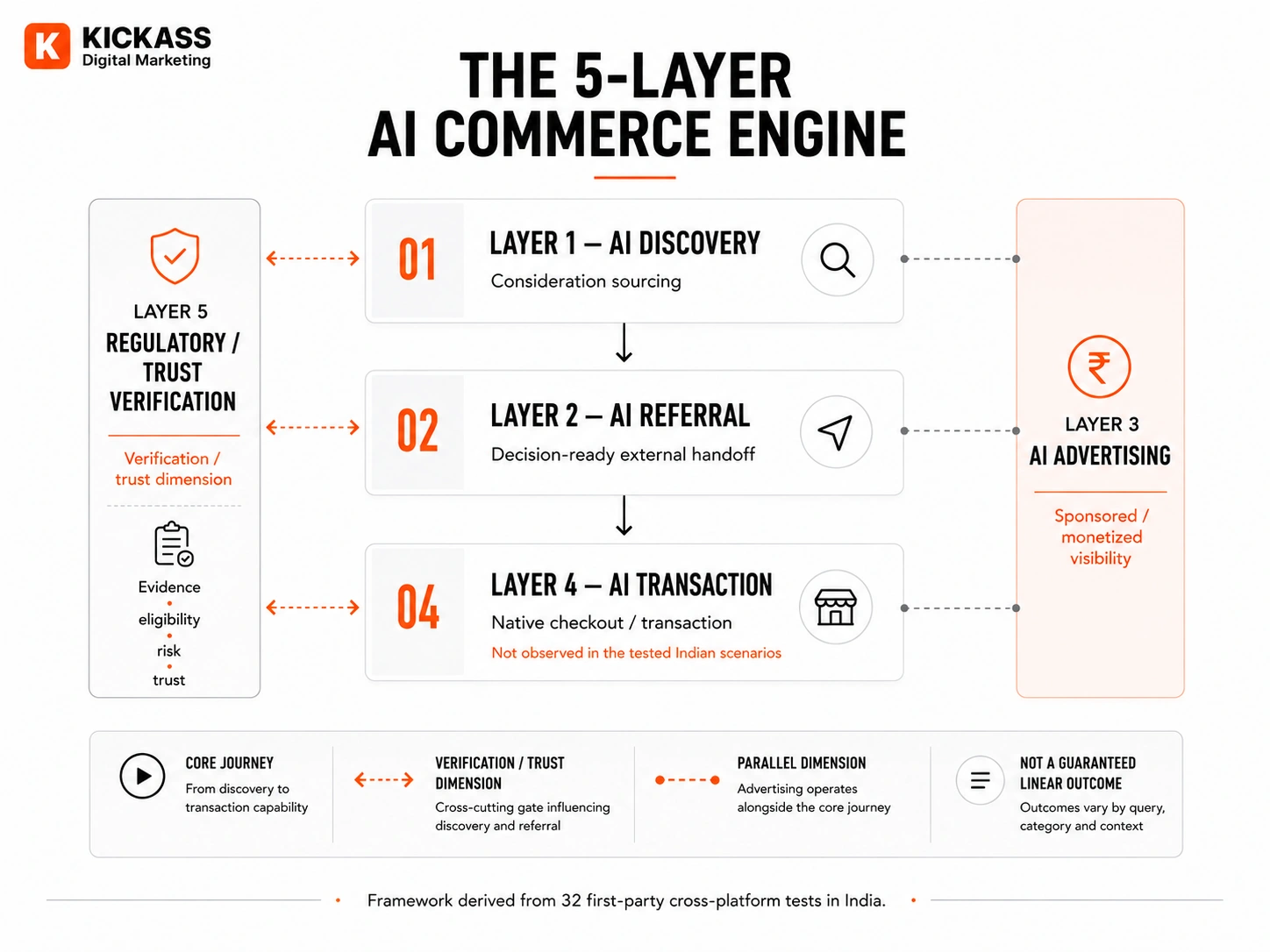
Figure 1- The 5-Layer AI Commerce Engine separates AI discovery, referral and transaction from the parallel advertising and regulatory/trust dimensions observed in the research.
AI Discovery is the consideration-sourcing layer.
The system interprets the user’s intent and assembles candidate entities using whatever combination of model knowledge, web search, product infrastructure, merchant data or other sources are available to it.
The key commercial question is:
Does the brand enter the AI’s consideration set at all?
AI Referral is the handoff from AI-generated consideration to an external destination.
In the tested Indian scenarios, this was the dominant commercial endpoint.
Depending on the platform, the handoff could appear as:
The strategic implication is important:
The page receiving AI traffic needs to convert a buyer who has already received an AI-generated explanation of the market.
That is a different landing-page problem from conventional search traffic.
AI Advertising is the monetized visibility layer that can operate alongside organic AI recommendations.
The research indicates that platforms distinguish between organic recommendation behavior and explicitly sponsored advertising or commercial placements.
This does not justify a universal claim that advertising can never affect any AI system’s output.
It does support a more practical distinction:
Paid visibility and organic recommendation should be treated as separate mechanisms unless a platform explicitly demonstrates otherwise.
For brands, that means an advertising strategy should not be assumed to substitute for organic entity readiness.
AI Transaction is the native purchase, booking or checkout layer.
This is the layer at the center of much of the agentic-commerce narrative.
However, in our Indian tests, we did not observe native checkout or booking completion across the 32 scenarios.
That makes Layer 4 commercially important precisely because it was not active in the tested environment.
The implication is not that native AI checkout will never arrive in India.
The implication is that brands should not build their entire current AI-commerce strategy around a transaction capability that their target market may not yet support.
Layer 5 represents the verification and trust dimension that becomes especially important when the category carries regulatory, financial or reputational risk.
The research showed platform responses referencing or claiming use of sources such as:
The exact sourcing mechanism differs by platform.
Layer 5 therefore should not be interpreted as a single universal government-database API operating inside every AI model.
It is better understood as an upstream verification concept:
Before an AI confidently recommends a high-risk entity, the entity needs sufficient trustworthy evidence for the system to construct a defensible recommendation.
That is the strategic gate brands need to prepare for.
The Regulatory and Trust Verification Layer is the part of the AI-commerce architecture concerned with whether an entity’s identity, claims, status and supporting evidence are sufficiently trustworthy for recommendation.
This layer becomes particularly visible in regulated categories.
The supplied research shows Gemini describing a multi-layered approach involving regulatory and infrastructure information for real-estate recommendations, while ChatGPT described using live listings, RERA/government records and market data.
That does not prove that every real-estate recommendation is independently verified against a government database.
It does show that regulatory and official information can become part of the recommendation evidence chain.
For a developer, that changes the optimization question.
A property project may have an excellent marketing website and still be difficult for an AI system to evaluate if its:
are difficult to reconcile across public sources.
Insurance creates an even clearer evidence problem.
The research shows different platforms describing or demonstrating reliance on:
The important point is that the AI is not simply reading the insurer’s marketing headline.
It may be comparing the substance behind the product.
That creates a new requirement for regulated brands:
Make the evidence behind the product discoverable, readable and internally consistent.
We use AI-opaque to describe business information that is difficult for an AI system to reliably discover, parse, interpret or reconcile.
Examples can include:
The strategic objective is not to “game” the AI.
It is to make the entity’s real-world evidence easier to discover and verify.
Our research found materially different sourcing patterns across ChatGPT, Gemini, Claude and Perplexity, which means “AI search” should not be treated as one uniform channel.
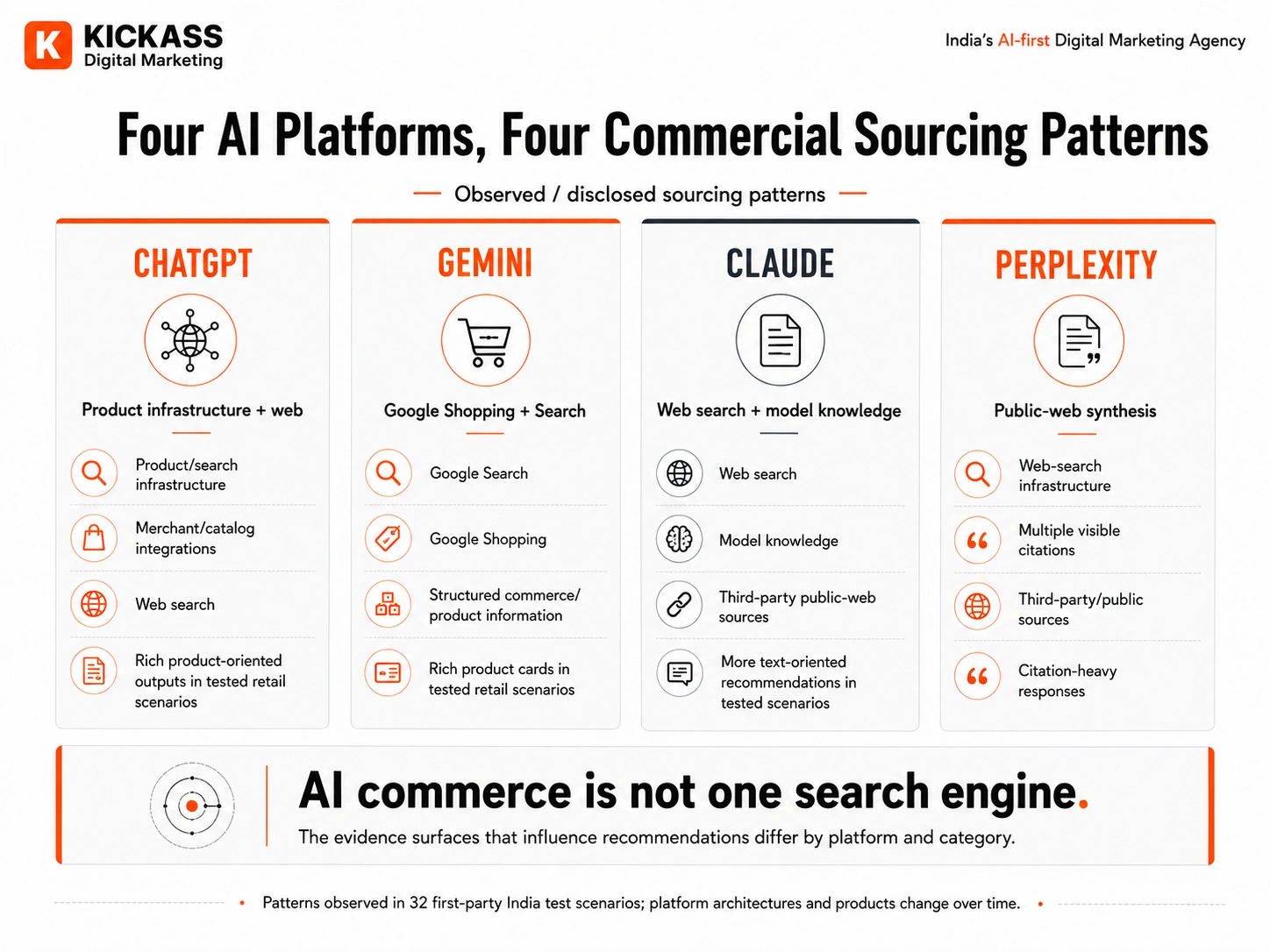
Figure 4– The research found materially different sourcing patterns across ChatGPT, Gemini, Claude and Perplexity — making “AI search” a multi-surface optimization problem rather than one channel.
In the tested retail scenarios, ChatGPT produced rich product-oriented outputs including product cards, pricing, ratings and merchant links.
Its platform disclosures referenced product-search infrastructure, merchant feeds, the Agentic Commerce Protocol, Shopify catalog integrations and web search.
For higher-consideration categories, the research showed more text-based comparison and evidence-oriented responses.
ChatGPT also stated that native Instant Checkout exists in limited markets and merchant contexts, while the tested Indian scenarios redirected users externally.
Strategic implication: Product-feed quality, structured product information and external entity authority can all matter, depending on the query and surface.
Gemini’s tested retail outputs frequently used rich product cards with pricing, images and ratings.
The research synthesis records Gemini identifying Google Search and Google Shopping infrastructure as key sourcing mechanisms.
For real estate and insurance, its responses also described more complex sourcing involving regulatory and market information.
Native checkout capability was described as geographically and merchant restricted, and no native checkout was observed in the tested Indian scenarios.
Strategic implication: Merchant/catalog readiness and high-quality structured information are particularly relevant to AI-mediated shopping surfaces associated with Google’s ecosystem.
Claude behaved differently.
The research synthesis found that Claude often used plain-text recommendations and, in some low-consideration tests, acknowledged that recommendations could originate from general model knowledge rather than a fresh web search.
For insurance and real estate, it also relied on third-party aggregators, public portals and market guides.
Claude stated that it does not provide native in-chat checkout and does not accept payment for brand placement.
Strategic implication: Winning on Claude cannot be reduced to optimizing a merchant product feed. Third-party authority, independent references and the broader public-web footprint remain important.
Perplexity consistently operated as a web-synthesis environment in the tested scenarios.
It provided numerous citations pointing to the public sources used in its responses.
Its research disclosures described an internal web-search infrastructure rather than direct marketplace APIs.
No native checkout was observed in the Indian scenarios.
Strategic implication: The quality and relevance of the external web sources that establish consensus around an entity can materially influence how the entity is represented.
AI commerce creates a new optimization problem: brands need to become discoverable, understandable, verifiable and referral-ready across multiple AI sourcing environments.
The four platforms in our study do not behave identically.
That means the old idea of a single “AI ranking factor” is too simplistic.
Instead, think in terms of evidence surfaces.
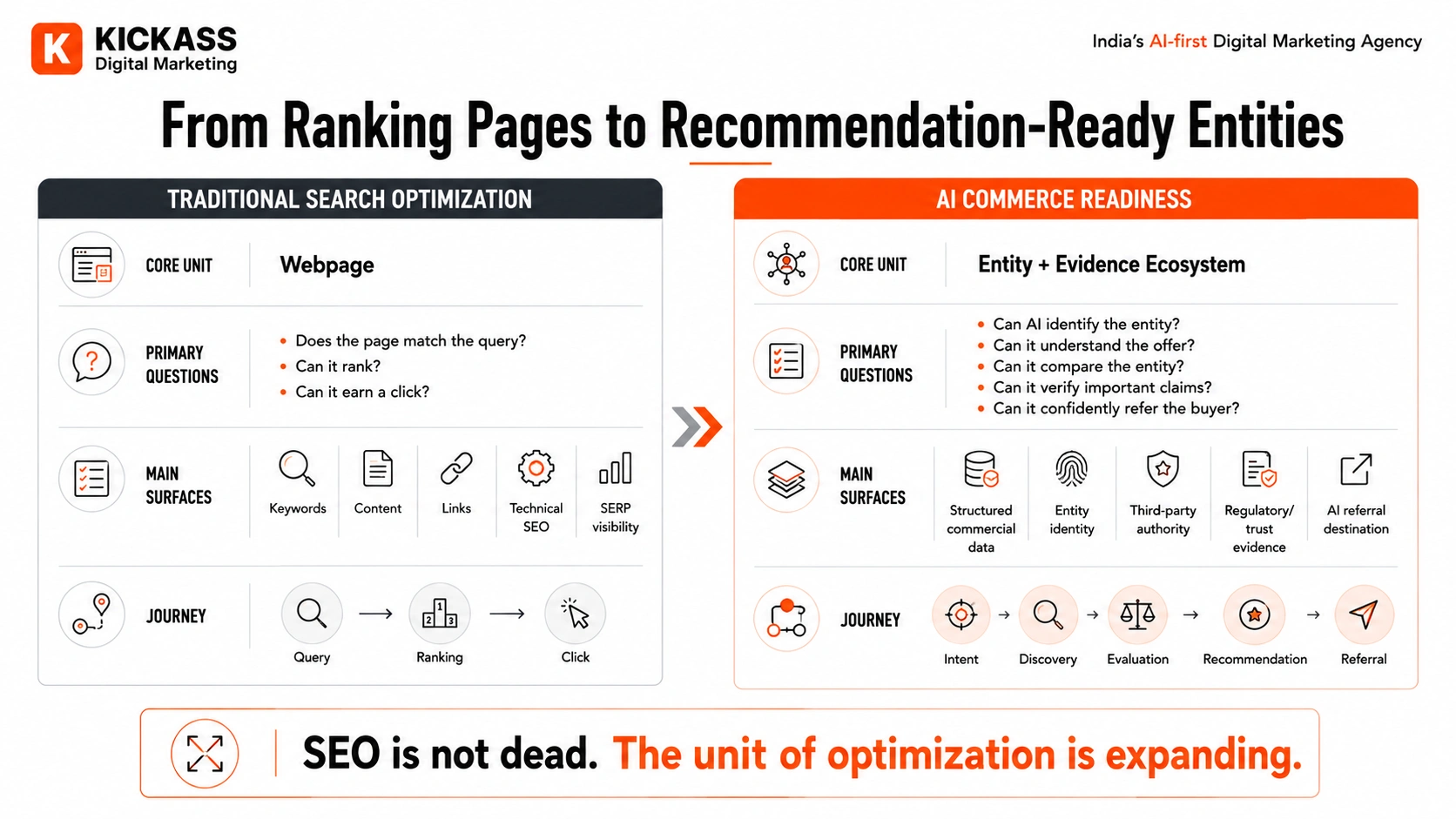
Figure 5– AI commerce expands the optimization problem from page-level search visibility to entity identity, structured information, external authority, evidence and referral readiness.
For shopping-oriented systems, product information needs to be:
This includes product feeds, catalog data and structured product information where relevant.
For web-synthesizing systems, the question becomes:
What does the rest of the web say about this entity?
Independent reviews, authoritative publications, comparison sites, industry sources and other trusted references can form part of the evidence environment from which an AI constructs its answer.
This is why AI visibility cannot be solved entirely on the brand’s own website.
For higher-risk categories, brands need their evidence to be:
The AI recommendation is not the end of the journey.
If the user is referred to the brand’s website, the destination needs to answer the questions the AI has already raised.
A strong AI-referral landing page should make it easy to verify:
Frequently Asked Questions
Traditional SEO primarily focuses on improving the visibility and relevance of webpages in search systems. AI optimization expands the problem to entity understanding, evidence availability, structured data, external authority and the ability of an AI system to confidently synthesize a recommendation.
Not in the Indian scenarios we tested.
The AI frequently influenced discovery and recommendation, but the transaction or inquiry remained external. The website therefore becomes the conversion and evidence destination after AI discovery rather than disappearing from the journey.
The Transaction Gap is the difference between an AI platform’s ability to influence or recommend a purchase and its ability to complete that purchase natively inside the AI interface.
In our 32 Indian test scenarios, we did not observe native checkout or booking completion.
The Liability Wall is our term for the observable shift toward more cautious, criteria-based AI behavior as financial, medical, legal or regulatory risk increases.
It is a research concept, not a claim about a known proprietary algorithmic threshold.
The two categories carry different levels of risk and complexity.
Low-consideration retail products can be represented through relatively standardized attributes such as price, specifications, availability and ratings.
Insurance requires analysis of policy wording, exclusions, insurer information, regulatory considerations and suitability.
The AI response therefore becomes more cautious and evidence-oriented.
The research supports treating sponsored advertising and organic recommendation as separate mechanisms.
The tested platform disclosures did not indicate that simply paying for a sponsored placement automatically purchases a higher organic recommendation position.
However, brands should not generalize this into a universal rule for every future AI advertising product. Platform-specific documentation and observed behavior should always be checked.
An AI-opaque document is information that is difficult for an AI system to reliably discover or parse — for example, an unsearchable scanned PDF, fragmented regulatory information or contradictory public documentation.
The solution is not to rewrite evidence for an AI.
It is to make legitimate business evidence easier for machines and humans to discover, read and reconcile.
There is no single answer.
Our research found materially different sourcing disclosures across the four platforms.
Gemini explicitly identified Google Search and Google Shopping infrastructure. ChatGPT identified Bing and its own product/web-search infrastructure. Perplexity described its own web-search infrastructure without disclosing the underlying search provider. Claude described its own search capability without identifying a specific underlying provider.
The lesson is simple:
Do not optimize for “AI” as though it were one search engine.
Your enterprise should move from a page-ranking mindset toward an entity-readiness system covering structured data, authority, evidence, regulatory readability and referral conversion.
A practical AI Commerce readiness program should ask five questions.
Audit:
Check whether the information is:
For regulated or high-value categories, map:
Audit the sources that already influence recommendations.
Find out:
Finally, test the destination.
If AI sends a buyer to your site after explaining the category and comparing alternatives, your landing page must be capable of finishing that decision.
That means AI visibility and conversion optimization can no longer be treated as separate disciplines.
The most important conclusion from this research is not that SEO is dead.
It is that page-level visibility is no longer the complete unit of competition.
AI systems can synthesize:
into a single recommendation.
The winning brand therefore needs more than a page that ranks.
It needs an evidence environment that allows an AI system to understand:
who the entity is, what it offers, why it is relevant, whether its claims can be supported, and where the buyer should go next.
That is the commercial opportunity inside the Transaction Gap.
And that is why the 5-Layer AI Commerce Engine matters.
The next generation of AI visibility will not be won by brands that simply optimize for more impressions. It will be won by brands that become easier for machines to discover, verify, explain and confidently refer.
KickAss Digital Marketing helps businesses prepare for AI-mediated discovery by connecting technical entity readiness, AI search visibility, authority and conversion.
Our approach is built around the same problem exposed by this research:
What does an AI system need to know, verify and understand before it can confidently recommend your business?
The 5-Layer Discoverability Audit is designed to examine:
For enterprises operating in high-consideration categories, the objective is not to manufacture an AI recommendation.
It is to make the legitimate evidence around the business sufficiently clear, consistent and discoverable that AI systems can evaluate it accurately.
Explore Commerce AI:
https://kickassdigitalmarketing.com/commerce-ai/
Explore AI readiness services:
https://kickassdigitalmarketing.com/services/ai-readiness/
This article is based on a first-party research program conducted by KickAss Digital Marketing in August 2026.
The research covered:
| Platform | Test environments | Categories | Follow-up themes | Observed Indian transaction behavior | Main sourcing pattern identified |
|---|---|---|---|---|---|
| ChatGPT | 8 | Moisturizers, earbuds, shirts, ACs, fridges, laptops, insurance, real estate | Sourcing origin; search provenance; checkout capability; commercial/sponsorship bias | External referral; no native checkout observed | Product-search infrastructure, merchant/catalog integrations and web search |
| Gemini | 8 | Moisturizers, earbuds, shirts, ACs, fridges, laptops, insurance, real estate | Sourcing origin; search provenance; checkout capability; commercial/sponsorship bias | External referral; no native checkout observed | Google Search, Google Shopping and web/structured data sources |
| Claude | 8 | Moisturizers, earbuds, shirts, ACs, fridges, laptops, insurance, real estate | Sourcing origin; search provenance; checkout capability; commercial/sponsorship bias | External destination; no native checkout observed | Web search, model knowledge and third-party public-web sources |
| Perplexity | 8 | Moisturizers, earbuds, shirts, ACs, fridges, laptops, insurance, real estate | Sourcing origin; search provenance; checkout capability; commercial/sponsorship bias | External referral; no native checkout observed | Internal web-search infrastructure and public-web sources |
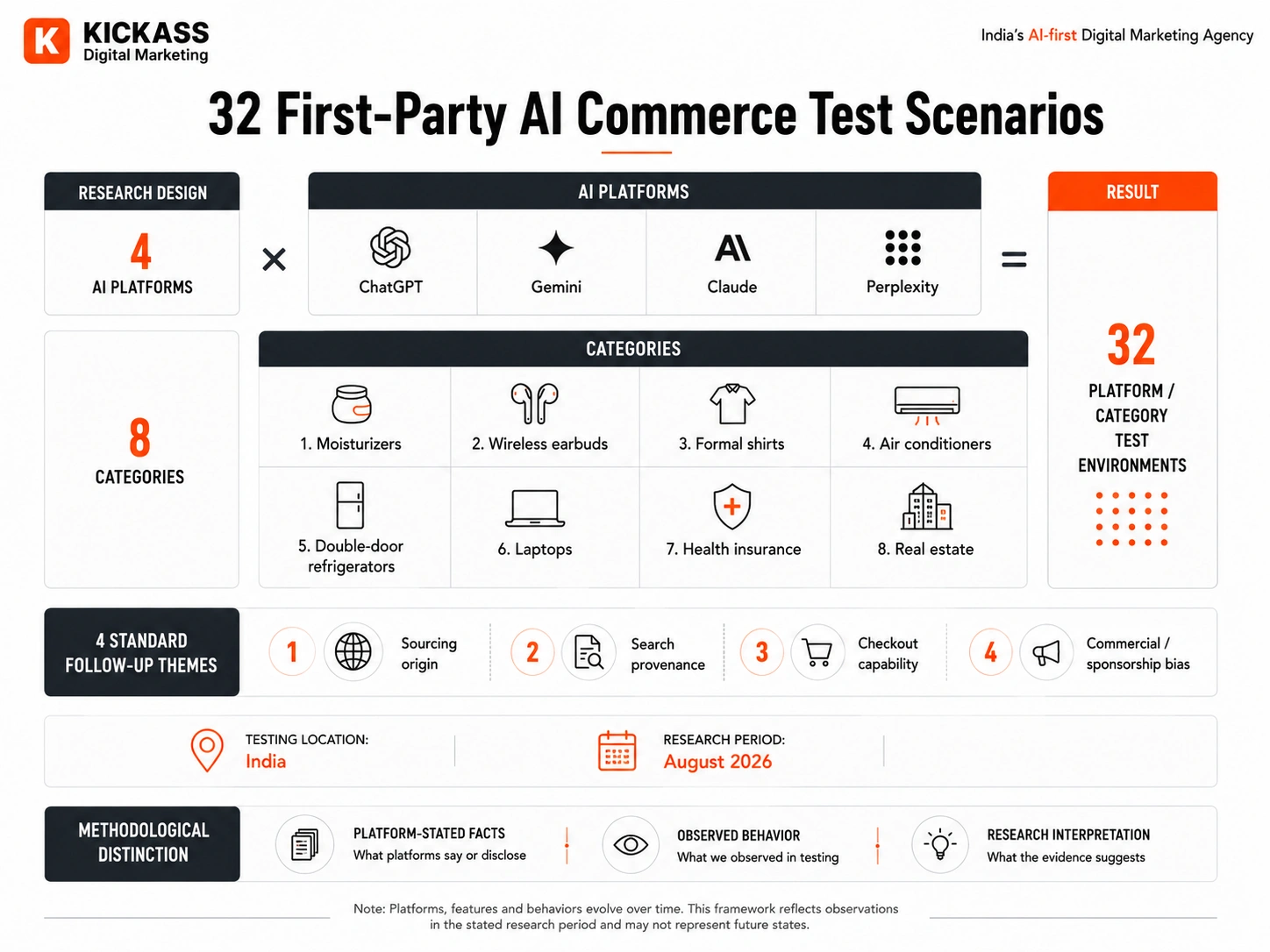
Figure 6: The research covered 32 platform/category test environments across four AI platforms and eight product and service categories, with four standardized follow-up themes.
The research separates three kinds of evidence:
Platform-stated facts
Claims made by the AI platform in response to questions about its own sourcing, commerce infrastructure, monetization or capabilities.
Observed behavior
What appeared in the tested outputs, including product cards, citations, links, recommendation formats, disclaimers and checkout behavior.
Research interpretation
Patterns derived by comparing those observations across platforms and categories. The Transaction Gap, Liability Wall and 5-Layer AI Commerce Engine belong to this interpretive layer.
This distinction is deliberate.
The purpose of the research is not to claim access to proprietary AI ranking algorithms. It is to document what the systems disclose and what they actually did in controlled commercial scenarios, then derive practical implications for brands.
The research program consists of 32 platform/category test environments and their associated follow-up interactions.
The full raw transcript set is not represented as a public downloadable dataset in this article unless explicitly linked by the publisher.
Where individual claims are material to a strategic conclusion, publication QA should attach the corresponding transcript or research-source citation.
This research describes behavior observed in a defined test environment. It should not be interpreted as a universal specification of how ChatGPT, Gemini, Claude or Perplexity behave in every market, account type, product category or future product version.
AI systems change rapidly.
The tests therefore answer a specific question:
What happened when these platforms were tested for commercial discovery and transaction behavior in India across the selected categories in August 2026?
They do not establish a permanent ranking algorithm.
They do not prove that every recommendation is sourced in exactly the same way.
They do not establish that every platform performs the same regulatory verification process.
And they do not imply that native AI checkout will remain unavailable in India indefinitely.
What they do provide is a practical snapshot of the AI commerce architecture brands need to prepare for now.