Get Marketing Insights First
Subscribe to receive actionable strategies, growth tips, and industry insights delivered straight to your inbox.

Gemini doesn't read your website the way a person does — it queries a live product graph, checks your classical search standing, and cross-references regulatory registries before it recommends you. Here's what our testing showed, and the new Merchant Center fields most brands haven't touched yet.
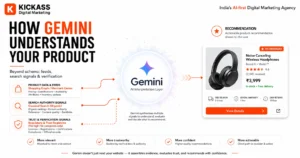
Gemini pulls structured data from Google’s Shopping Graph — pricing, specifications, and availability sourced from Google Merchant Center — and weighs it alongside classical Google Search signals like organic ranking and domain authority. A brand with a perfect product feed but weak organic standing is still at a disadvantage.
Yes. If your product isn’t in a synchronized, accurate Merchant Center feed, Gemini has no structured way to describe or recommend it — it will fall back to marketplaces (Amazon India, Myntra, Tata CLIQ) that already supply that data.
Yes, and more than most guides admit. Gemini’s recommendations correlate with existing organic search performance — schema and feeds are additive, not a replacement for ranking well in the first place.
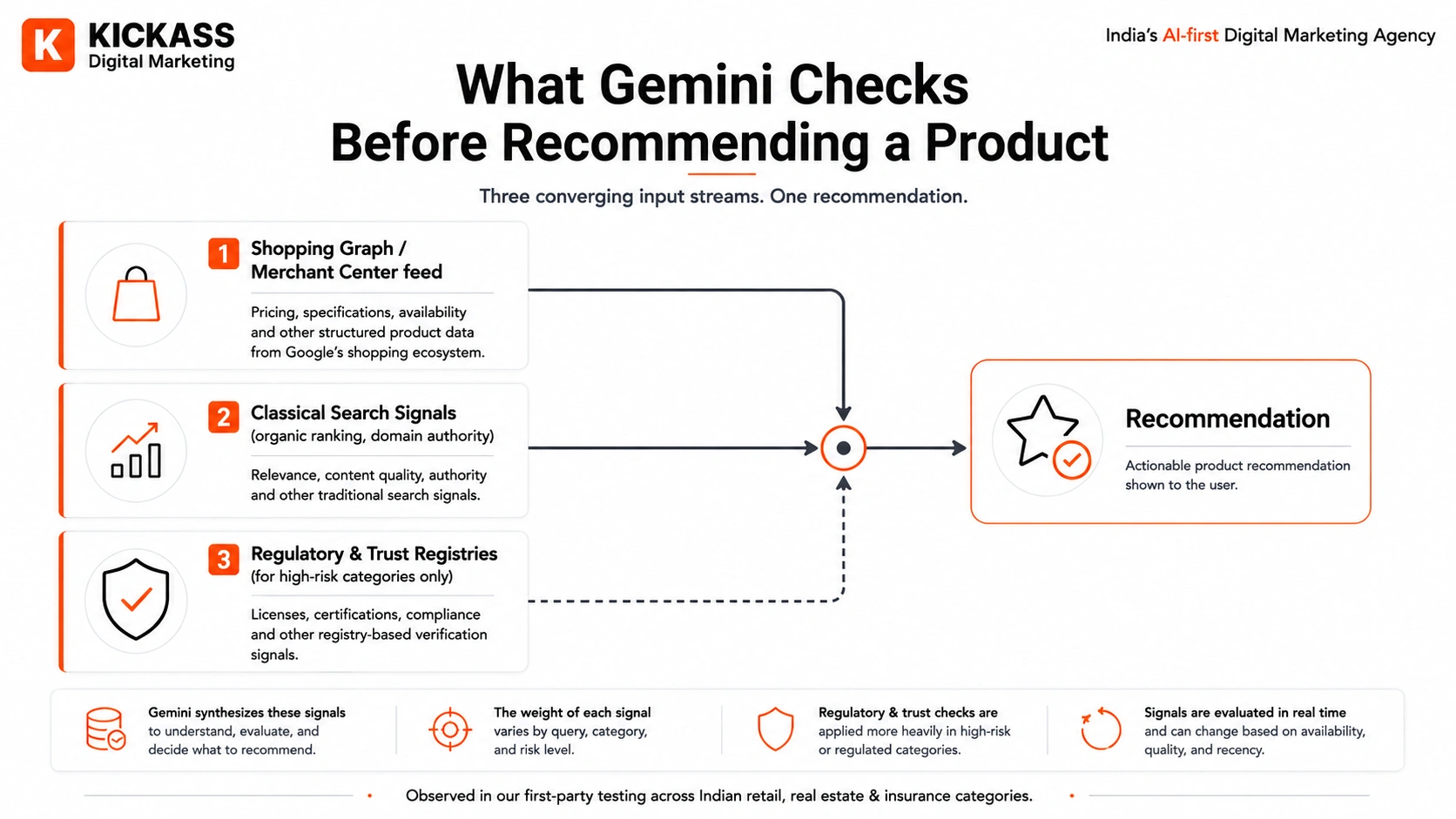
Figure 1- Gemini recommendations can draw on multiple evidence streams rather than a single page or schema source, with the weight of each signal varying by query and category.
Most guidance on Gemini optimization jumps straight to schema markup and product feeds. That’s necessary but incomplete. Gemini is built on Google’s existing search infrastructure, and its recommendations correlate closely with a brand’s established organic ranking and domain authority — the same signals that have driven classical SEO for two decades. Independent tracking backs this up starkly on the pure AI Overview side too: one analysis found only about 17% of Google AI Overview citations by early 2026 came from pages also ranking in the organic top 10 — down from 76% in mid-2024, a sharp reminder that “rank well and you’ll get cited” is no longer a safe assumption even within Google’s own ecosystem. Our GEO services page goes deeper into that specific shift if you want the full picture beyond Gemini alone.
Practically, this means schema and feed work is additive, not a substitute. A flawless product feed attached to a domain with weak organic authority will still lose out to a competitor with a merely adequate feed and strong existing search performance. If your organic foundation is thin, that’s the first gap to close — everything in the rest of this post assumes it as a baseline, not a replacement for it.
This is the commerce application of the KickAss BASE™ Model for SEO & AI Search. Build means protecting the organic SEO foundation. Add means supplying the structured commercial layer Gemini can actually use — Merchant Center feeds, accurate product attributes and current availability. Study covers emerging features and observed recommendation patterns. Exclude means refusing to treat generic schema, feed completeness or any single technical intervention as a guaranteed AI-recommendation lever.
In our testing across Indian retail categories — earbuds, air conditioners, laptops, apparel — Gemini consistently triggered a live query against the Shopping Graph rather than answering from general knowledge. For a query about budget wireless earbuds, it extracted specific hardware parameters — ANC depth in decibels, battery endurance, Bluetooth codec support — and matched them against current pricing, rendering the result as a visual product card with images, star ratings, and a direct outbound link.
If your Merchant Center feed doesn’t expose those granular attributes, Gemini doesn’t leave the space blank — it falls back to marketplaces that already supply them, such as Amazon India, Myntra, or Tata CLIQ. That’s a direct loss of the D2C referral path for brands that rely on their own domain.
At Google Marketing Live 2026 in May, Google added six new optional product-data fields to Merchant Center, collectively called Conversational Attributes: question_and_answer, document_link, related_product, item_group_title, variant_option, and popularity_rank. They exist specifically so AI surfaces — Gemini, AI Mode in Search, and other agent-driven shopping experiences — can parse product nuance the way a knowledgeable salesperson would, rather than matching keywords against a title field.
These fields are optional and don’t affect product approval or your standard Shopping ads, which means there’s no downside to testing them. They’re also, as of this writing, adopted by only a minority of merchants — which is exactly why filling them in now is a genuine, time-limited competitive advantage rather than routine housekeeping.
Alongside this, Google has begun piloting AI Performance Insights inside Merchant Center — a reporting layer showing share of voice against comparable brands, funnel-stage performance (discovery, evaluation, purchase), and attribute-completeness scoring, specifically for AI-driven surfaces. Per Google’s own rollout documentation, India is among the first markets scheduled to receive this after the initial US pilot — worth watching directly in your Merchant Center account rather than waiting for third-party coverage.
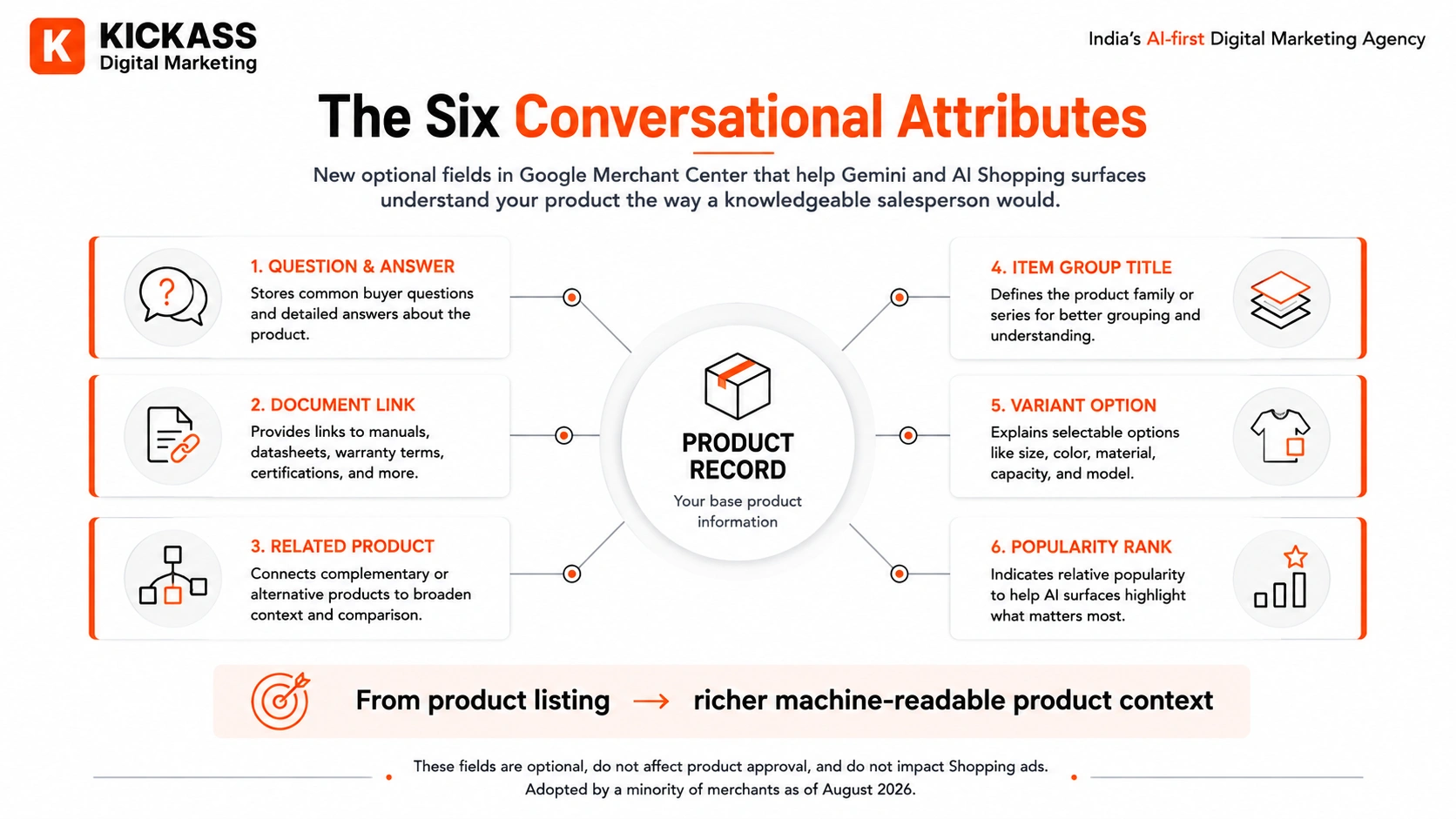
Figure 2: Google’s six Conversational Attributes expand a standard Merchant Center product record with richer context that AI shopping systems can interpret during product discovery and comparison.
As covered in our foundational research, The 5-Layer AI Commerce Engine, risk and regulatory complexity trigger a distinct behavioral shift across AI platforms — what we call the Liability Wall, sitting inside the framework’s Regulatory/Trust Verification layer. Gemini shows this shift clearly.
In our real estate testing, Gemini abandoned its shopping-assistant behavior entirely for Bangalore property queries, instead cross-referencing project claims against the Karnataka RERA portal — evaluating builder track record, delivery timelines, and legal approvals before presenting anything resembling a shortlist. For health insurance, it pulled from IRDAI master circulars and public disclosure forms (NL-25/NL-26) to check claim-settlement ratios and room-rent caps rather than repeating a policy’s own marketing language.
For enterprise brands in regulated categories, the practical takeaway is blunt: a polished marketing site does nothing here. If your project’s RERA filing or your insurer’s IRDAI disclosure doesn’t match what’s on your own site, Gemini’s verification pass flags the mismatch as risk, not opportunity.
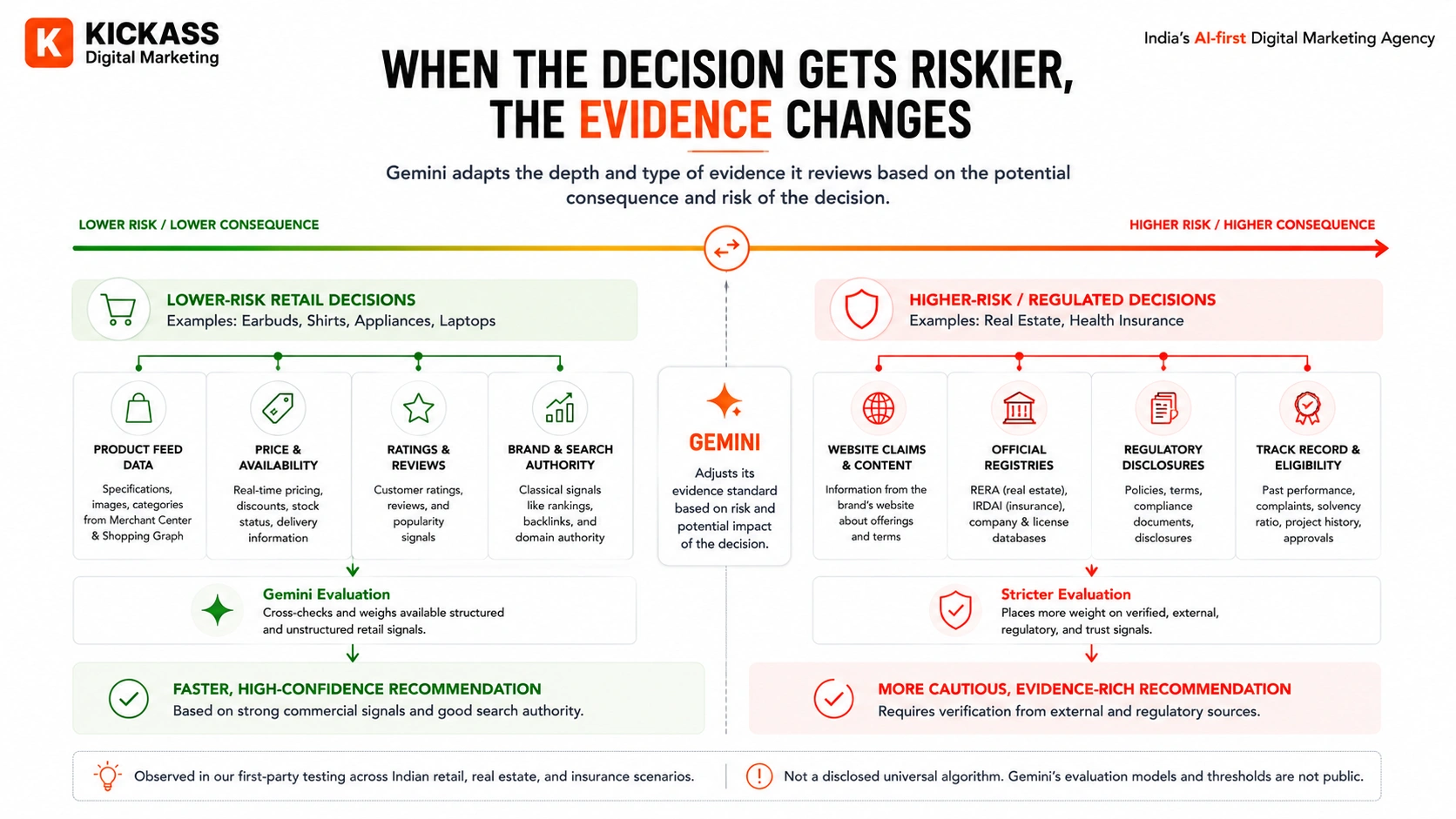
Figure 3: As decision risk increases, Gemini can move beyond commercial product signals and place greater weight on external, regulatory and trust-based evidence.
Google’s Universal Commerce Protocol (UCP), which underpins native “Buy with GPay” checkout inside Gemini, launched in January 2026 and is currently live with merchants including Etsy and Wayfair — but only in the U.S. and Australia. For the Indian market, Gemini functions purely as a decision layer: every tested transaction in our research ended in an outbound redirect, not an in-chat purchase.
That gap is exactly why the referral itself carries so much value. A buyer arriving at your site from Gemini has already had their intent interpreted, alternatives compared, and a shortlist constructed — they are not a cold click. Landing pages built for AI-referred traffic should assume the visitor already knows the category and skip straight to confirming the specific decision Gemini already walked them through.
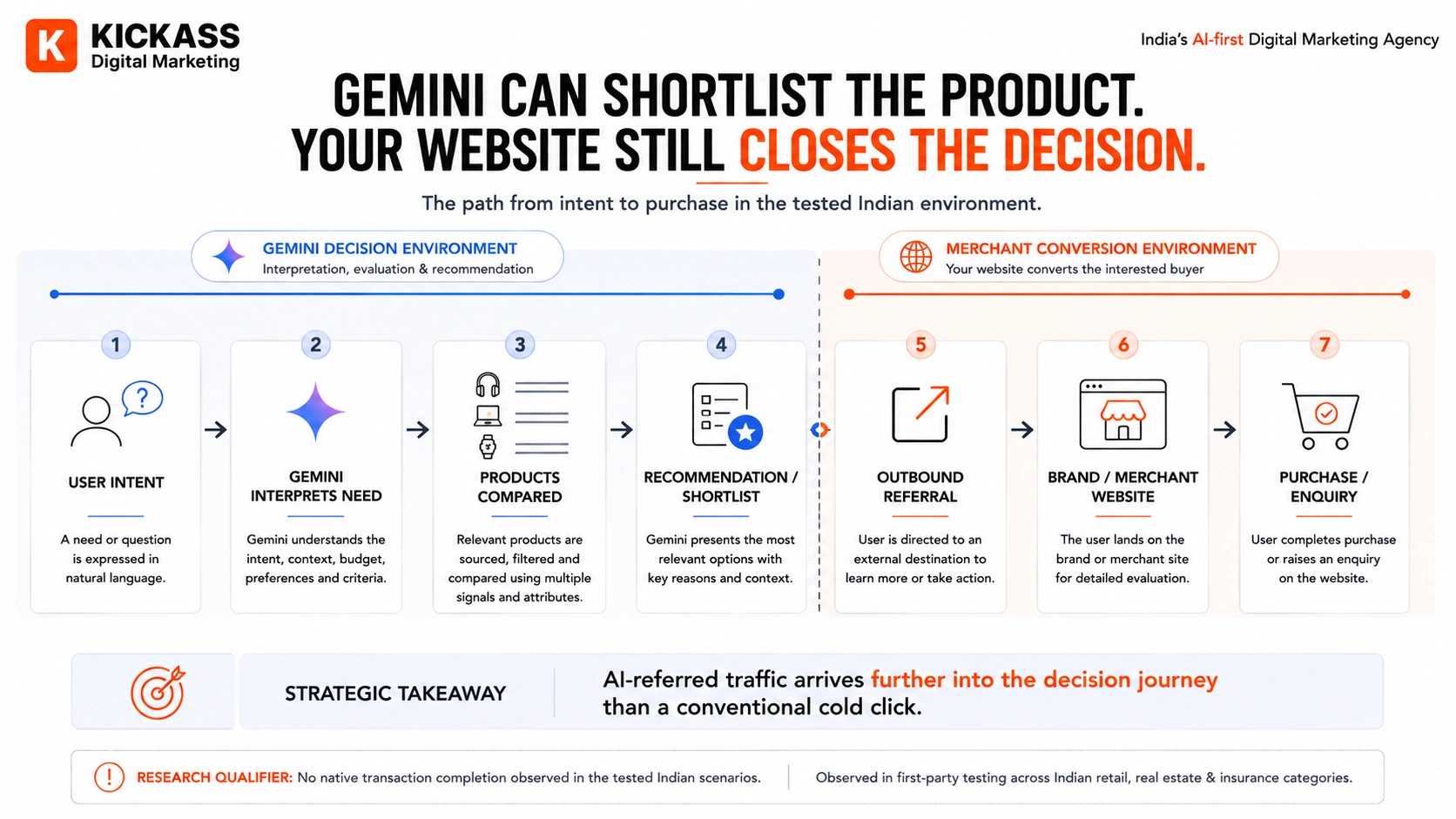
Figure 4: In the tested Indian environment, Gemini handled interpretation, comparison and shortlisting, while the merchant website remained the environment where purchase or enquiry conversion occurred.
Product schema with offers, aggregateRating, and additionalProperty blocks carrying your genuine technical specifications.LocalBusiness and Organization schema so Gemini’s verification layer can reconcile your domain with the public record.This is fundamentally an entity-clarity and cross-source-consistency problem, not a keyword problem — the same ground ShodhDynamics’ ESC™ Framework (Entity Clarity, Semantic Authority, Cross-Source Trust) was built to cover, and worth reading alongside this if you’re building the underlying strategy rather than just the checklist.
Frequently Asked Questions
Gemini treats this as a disqualifying error, not a minor discrepancy — the product is dropped from the recommendation loop to avoid surfacing bad information to the user.
No. Google keeps sponsored placements — including the emerging AI Mode ad formats announced alongside Conversational Attributes — structurally separate from organic recommendation synthesis, based on the platform’s own disclosures.
They run on the same underlying Gemini models and draw from the same Shopping Graph and Search index, so optimization work largely overlaps — but AI Overviews surface inside traditional Search results, while the Gemini app is a standalone conversational interface.
Not currently. UCP-based checkout is live only in the U.S. and Australia as of this writing. There’s no disclosed timeline for Indian availability, so referral-optimized landing pages remain the more durable investment for now — see our coverage of the broader Transaction Gap for what that means strategically.
Want to see where your product feed and schema actually stand today? Run a check with our AI Discovery Readiness assessment.